
It always seems to happen on the coldest morning of the year: you turn the key, the engine groans, and nothing happens. If your car battery keeps going flat, you are not alone — a discharging battery is one of the most common reasons UK drivers call for help. The encouraging news is that a flat battery is a symptom, not a diagnosis. Sometimes the battery itself is simply worn out, but often something else is draining it or stopping it from charging. Understanding the likely causes helps you fix the real problem instead of buying a new battery every winter.
Why a car battery keeps going flat: the usual suspects
Age. Car batteries are consumable parts. After several years of service their ability to hold charge fades, and the first cold snap of winter exposes the weakness. If your battery is old and the car struggles most on cold starts, age is the prime suspect.
Short journeys. Starting the engine takes a large bite out of the battery, and the alternator needs a decent run to put that charge back. A car used only for short hops to the shops may never fully recharge, so it gets progressively weaker until one morning it gives up. Regular longer drives are genuinely part of basic vehicle maintenance, not just a pleasure.
Something left on — or switching itself on. Interior lights, a boot light that fails to switch off, a dashcam in parking mode or a faulty module that refuses to sleep can all drain a battery overnight. This is known as a parasitic drain, and it explains the classic mystery of a battery that tests fine yet is flat by morning.
Charging problems. If the alternator is not charging properly, the battery slowly empties no matter how far you drive. A slipping or snapped auxiliary belt can have the same effect. A red battery warning light on the dashboard while driving points firmly in this direction.
Corroded or loose connections. Dirty, corroded terminals and loose clamps create resistance, so the starter motor gets less power and the battery receives less charge. It is the cheapest cause on this list and the first thing to check.
Checks you can do at home
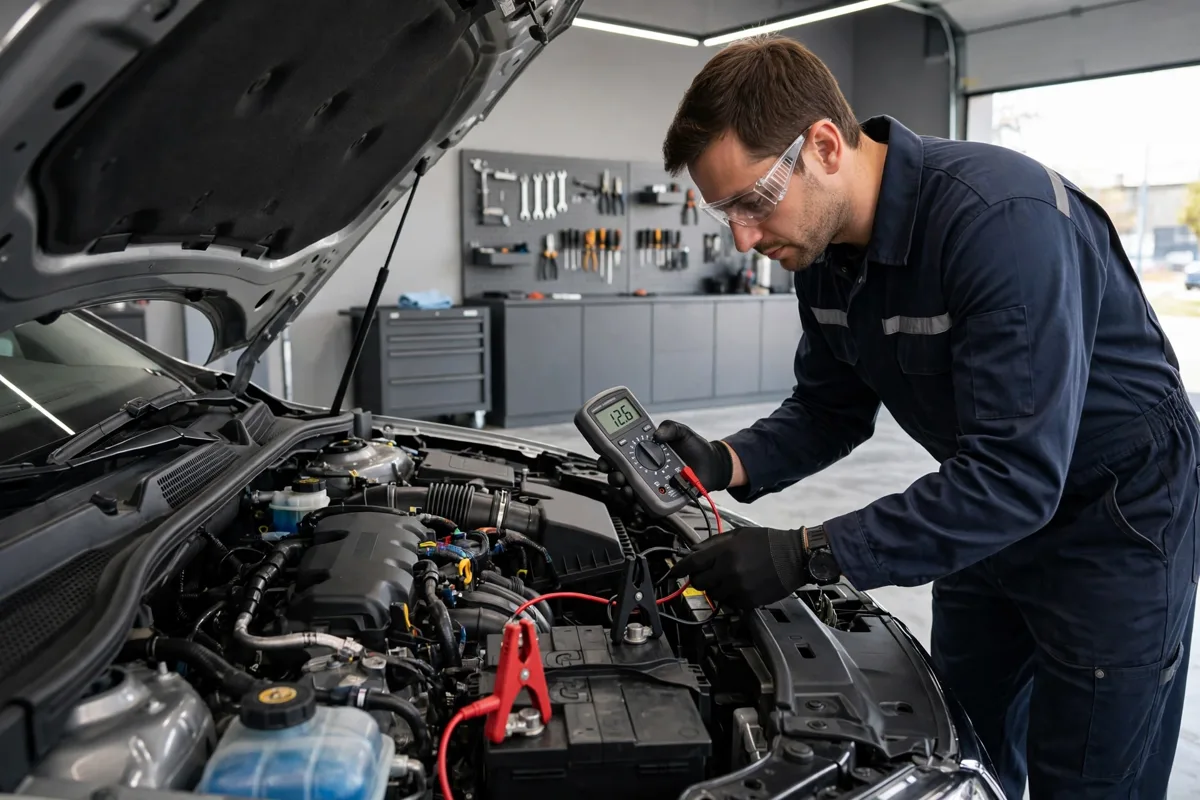
Start with your eyes. Look at the battery terminals: white or green crusty deposits mean corrosion, and the clamps should be tight enough that you cannot twist them by hand. Check that the battery is held securely — vibration shortens battery life. If you have a multimeter, a healthy resting battery reads around 12.6 volts; significantly less suggests it is discharged or failing.
Think back over recent journeys, too. A pattern of very short trips, a car left unused for weeks, or a new accessory fitted just before the trouble started are all valuable clues. Keeping notes like this helps a garage enormously — it is the same reason a proper vehicle inspection begins with the car’s history rather than its engine.
Jump-starts, chargers and when they help
A jump-start gets you moving, but it does not solve anything by itself, and modern cars with sensitive electronics need jump-starting done carefully and in the right order. After a jump-start, the car needs a proper drive — a good half hour at varied speeds — to restore meaningful charge. Better still, a smart battery charger used overnight restores a deep, full charge that short drives cannot match, and many chargers can run a recovery mode for neglected batteries.
If the battery goes flat again within days of a full charge, stop jump-starting and start diagnosing. Repeated deep discharges damage a battery permanently, so every flat morning shortens its life further. This is where a garage’s help becomes worthwhile: a proper test of the battery, the charging system and any parasitic drain is a routine part of car servicing and takes far less time than most drivers expect.
When a replacement battery is the real answer
Batteries do not last forever, and once a battery can no longer hold a charge, no amount of careful driving will save it. A garage can run a load test that shows the battery’s true health in minutes. If it fails, replacement is straightforward — but make sure the new battery matches the specification your car needs, particularly if your car has stop-start technology, which requires a specific type of battery. Fitting the wrong type is a common and expensive mistake.
Electric vehicles are not immune to this problem either: every EV has a conventional 12-volt battery for its lights, locks and electronics, and it can go flat just like any other, which is one of the less-known points covered in our guide to EV servicing.
Warning signs before it lets you down
A battery rarely fails without rehearsing first. The starter motor turning over more slowly than it used to — that lazy, reluctant churn on a cold morning — is the classic early warning. Dim headlights at idle that brighten as you rev, electrical glitches such as windows moving sluggishly, or a car that starts perfectly after a run but struggles after standing all point the same way. Treat these as a prompt to get the battery tested while the car still starts, not as quirks to live with. A battery test is quick, often free at garages and fast-fit centres, and it turns a future breakdown on a wet hard shoulder into a planned, inexpensive replacement at a time of your choosing.
Stopping it happening again
Prevention is mostly habit. Use the car for a decent run regularly, switch everything off before you lock up, keep terminals clean and tight, and treat a slow, lazy start as an early warning rather than ignoring it. If the car will be parked for several weeks, a maintenance charger keeps the battery healthy in storage. And if the problem keeps returning despite a healthy battery and a working alternator, ask for a parasitic drain test — tracking down a module that will not sleep is a job for methodical auto repair diagnostics, and it ends the flat-battery lottery for good.
A battery that keeps going flat is your car telling you something. Listen early, and the fix is usually simple, quick and inexpensive.