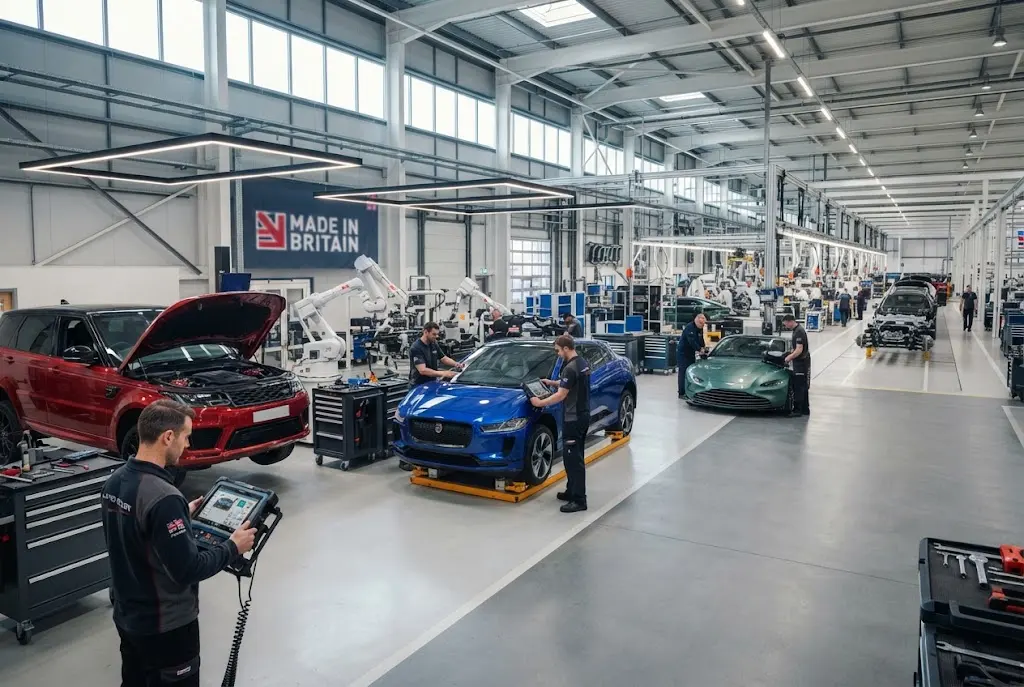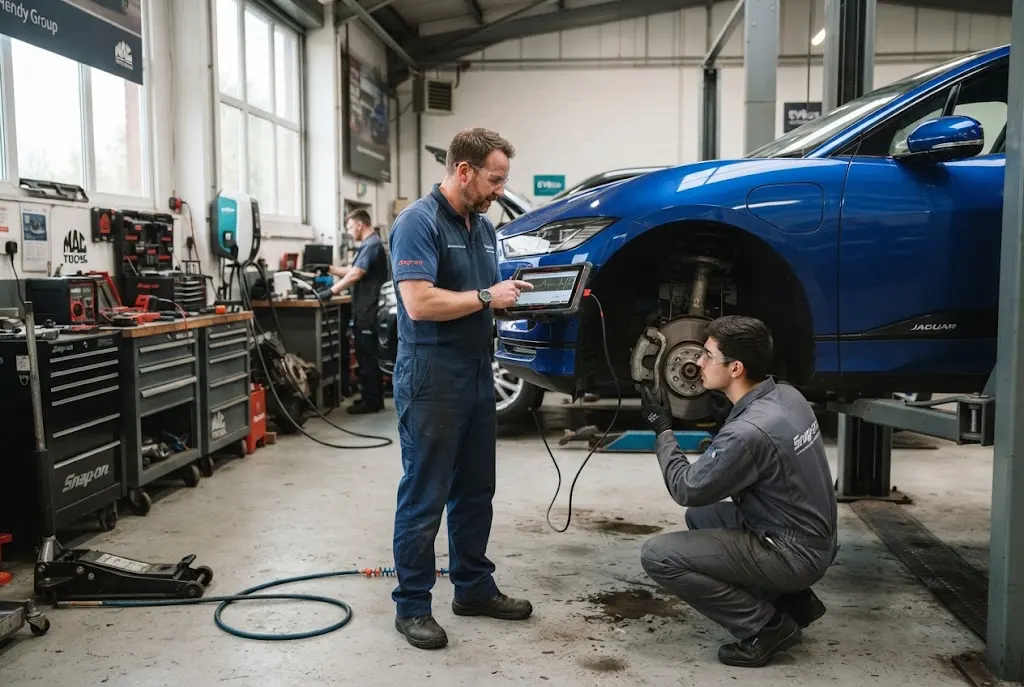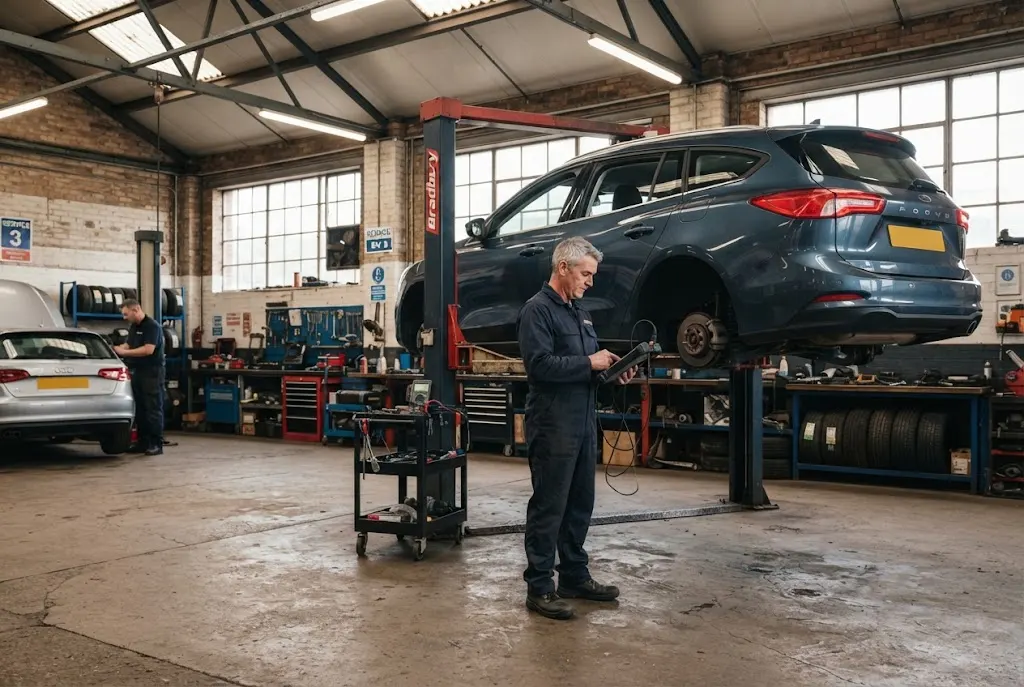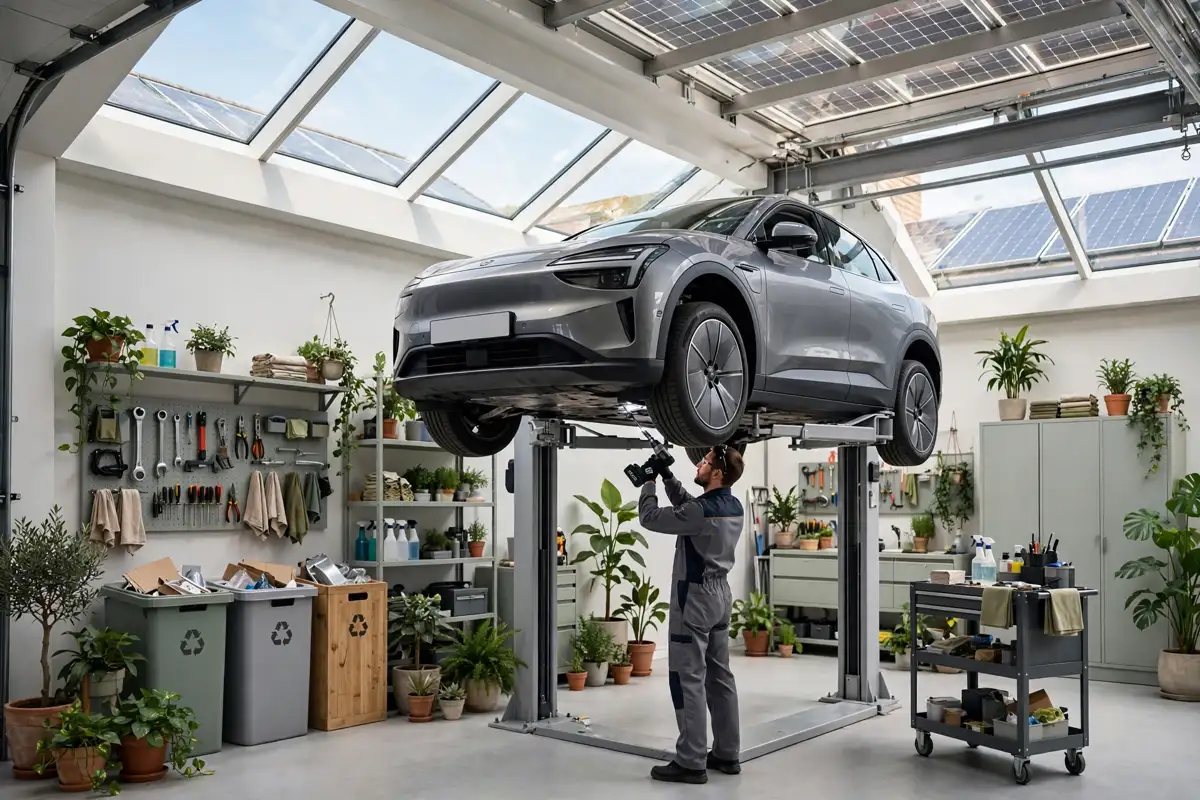

Sustainable automotive services are changing what a routine visit to a garage can mean for your car, your wallet and the environment. Instead of simply replacing parts and disposing of whatever comes off the vehicle, a growing number of UK workshops now repair where it is safe to do so, recycle waste properly, use energy more carefully and explain their choices openly. For car owners, that shift matters. Servicing will always involve oil, filters, tyres and worn components, yet how a garage handles those everyday items makes a real difference over the life of a vehicle.
This guide explains what sustainable servicing actually involves in practice. It looks at green workshops, recycling and the circular economy, remanufactured parts, energy efficiency and readiness for hybrid and electric cars. It also covers the honest limits, because a genuinely greener garage is not one that makes the boldest claims. It is one whose working habits you can see, question and verify.
What Are Sustainable Automotive Services?
Sustainable automotive services put repair, reuse and responsible disposal at the centre of ordinary maintenance. The aim is straightforward: keep a vehicle safe, reliable and efficient for as long as it is sensible to do so, while wasting as little as possible along the way. That can mean cleaning and testing a component before replacing it, fitting a quality remanufactured part where appropriate, or making sure used oil and old batteries never enter the general waste stream.
It also means looking beyond the car on the ramp. A workshop uses energy, water, packaging and consumables every day, and it produces waste that needs careful handling. When you read about how a UK auto service garage works from the inside, you begin to see how many small decisions sit behind a single service. Sustainable practice joins those decisions together, from the parts counter and the workshop floor to the invoice and the conversation at reception.
For drivers, the idea should never feel abstract. A sustainable approach might keep an older but sound car in good order for longer, or reduce the number of new parts a repair requires. It does not mean keeping an unsafe vehicle on the road, cutting corners on safety, or refusing a replacement that is genuinely needed.
Why Green Workshops Matter for Emissions Reduction
Green workshops contribute to emissions reduction in two practical ways. First, a well-maintained car tends to run more cleanly and efficiently than a neglected one. Correct servicing, attention to tyres, filters and engine condition, and prompt repair of faults all help a vehicle work as its maker intended. None of that turns an older petrol or diesel car into a zero-emission vehicle, and a responsible garage will not claim otherwise. It can, however, avoid the extra waste and inefficiency that come with poor maintenance.
Second, the workshop itself has a footprint. Heating, lighting, compressed air, vehicle lifts and diagnostic equipment all use energy, while deliveries and waste collections add further activity behind the scenes. A greener garage pays attention to that wider picture rather than treating sustainability as a single product on a shelf. Over many services and repairs, careful habits become the normal way the business operates, which is where lasting improvement usually comes from.
Recycling, Waste Oil and the Circular Economy
Recycling is where sustainable servicing becomes most visible. A typical workshop handles used engine oil, oil filters, coolant, batteries, tyres, brake parts, metals, cardboard and plastic packaging. Each stream needs suitable storage and a proper route onwards. Used oil, for example, should be stored securely and collected for appropriate treatment or reprocessing rather than poured away or mixed with other waste. Batteries and tyres likewise need specialist handling through established collection routes.
The circular economy takes that thinking a step further. Instead of a simple line from new part to bin, materials and components are kept in use for as long as they safely can be. Metal from worn parts can be recovered as scrap for recycling. Packaging can be sorted rather than landfilled as mixed waste. Some components can be returned for remanufacturing, so their casings and durable elements begin another working life.
Drivers rarely see this side of a service, so it is reasonable to ask about it. A workshop that segregates its waste, keeps its storage tidy and can explain who collects its oil, batteries and tyres is showing you a system, not a slogan. That quiet organisation says more about environmental care than any poster in the waiting area.
Sustainable Repairs and Remanufactured Parts
Sustainable repairs start with a simple question: does this component really need to be replaced? Sometimes the answer is clearly yes. Brake, steering and other safety-critical parts must never be kept in service beyond safe limits, and a good technician will explain why replacement is necessary. In other cases, cleaning, adjustment, testing or a targeted repair may restore a part properly. The skill lies in knowing the difference and being honest about it.
Remanufactured parts offer another option. A remanufactured component is not simply a used part taken from another vehicle. It is a part that has been taken apart, cleaned, inspected and rebuilt with worn elements replaced, then tested to perform its intended job. Used appropriately, remanufactured parts can reduce demand for raw materials and new manufacturing while still giving the customer a dependable repair. They will not suit every job, every vehicle or every timescale, and the garage should discuss quality, availability and any warranty in plain terms before fitting one.
Energy Efficiency Inside the Workshop
Energy efficiency is less glamorous than many green claims, yet it is one of the most credible signs of a serious workshop. Efficient lighting, well-maintained equipment and sensible heating all reduce wasted energy in a building that is often large, busy and open throughout the day. So do smaller routines: switching off equipment that is not in use, maintaining compressors and lifts properly, and planning work so vehicles are not moved or run unnecessarily.
Digital working can help as well. Electronic job cards, invoices and service records reduce paper without making the experience impersonal. Accurate diagnostics matter too. Finding a fault correctly the first time avoids trial-and-error part swapping, repeat visits and wasted materials. In that sense, good technical work and greener work often overlap. Precision saves the customer money and saves resources at the same time.
Ready for Hybrid and Electric Cars
As more hybrid and electric cars arrive for routine work, sustainable automotive services must include the skills and safety procedures those vehicles require. Electric and hybrid vehicles still need tyres, brakes, suspension, cabin filters, coolant checks and many other familiar items, but work around high-voltage systems calls for suitable training, equipment and care. A garage that invests in that readiness is preparing for the cars its customers already own, not simply chasing a trend.
Our overview of hybrid services in the UK and the move towards electric vehicles explores that transition in more detail. For owners, the practical point is to ask whether a workshop is equipped for your particular model and the job you are booking. A garage that is open about what it can and cannot do, and that refers specialist work appropriately when needed, is behaving responsibly.
Battery care also belongs in this conversation. Careful diagnosis can prevent a healthy battery system being condemned because of a smaller related fault, while end-of-life batteries need proper specialist routes for reuse or recycling. Again, the sustainable answer is knowledge first, replacement second where safety and evidence allow.
Environmental Standards, Net Zero and Honest Limits
Environmental standards give workshops a framework for handling waste, storing fluids safely and understanding their responsibilities. Meeting those standards should be treated as the baseline, not as a marketing prize. In the same way, the wider ambition of net zero is best understood as a direction of travel: reduce energy use and waste where possible, make lower-impact choices when they are practical, and keep improving over time.
Drivers will see this alongside familiar legal requirements for their own cars. Our guide to MOT and service rules, costs and compliance in the UK explains how testing and maintenance differ. An MOT is not a sustainability certificate, and a service is not a guarantee that a vehicle has no environmental impact. Keeping a car correctly maintained and roadworthy is, however, part of responsible ownership.
Honesty matters because there are limits. Some parts must be new. Some waste can only be treated, not recycled back into the same product. Keeping an older car running can avoid the impact of replacing it, but an inefficient or unreliable vehicle will not suit every driver forever. The most trustworthy green workshops acknowledge those trade-offs instead of presenting every repair as planet-saving.
How to Recognise a Genuinely Green Workshop
You do not need technical knowledge to spot credible signs. Start with questions a good garage should welcome, and listen for specific answers about everyday practice rather than general claims about caring for the planet.
- Ask how used oil, batteries, tyres and old parts are stored and collected.
- Ask whether repair or a remanufactured part was considered before a new replacement.
- Ask for old parts back, or ask to see them, where it is practical and safe to do so.
- Look for clear estimates that separate necessary work from advisory work.
- Ask whether the garage can service your hybrid or electric model safely.
- Notice whether the workshop is tidy, organised and willing to explain its waste arrangements.
Be cautious with vague language. Words such as eco, green and sustainable are easy to print and harder to demonstrate. Evidence can be modest and still convincing: a named waste collection arrangement, a clear explanation of a remanufactured option, or a technician who tells you a part does not need replacing yet. Transparency is often the clearest green credential of all.
What Sustainable Servicing Means for Car Owners
Choosing sustainable automotive services does not require you to change how you drive overnight or to accept a lesser standard of care. It mainly changes the conversation when you book. You can ask what will happen to the parts removed from your car, whether a repair has been considered, and how the garage avoids waste in its own building. Those questions reward businesses that already work carefully and encourage others to think harder.
There may be times when the greener option takes a little longer or is not available for your vehicle. A good garage will explain that openly and let you decide with the full picture. There will also be times when sustainable practice saves waste without adding anything to your bill, simply because the workshop is well run. Either way, you should leave understanding what was done and why.
Regular maintenance remains the foundation. Following the servicing schedule for your car, dealing with faults promptly and keeping records all support safety, reliability and efficiency. Sustainability strengthens those habits. It does not replace them.
A Greener Choice Without the Hype
Sustainable automotive services are not about a single technology, a special label or a perfect workshop. They are about repair before replacement where that is right, recycling handled properly, parts and materials kept in use through the circular economy, energy used with care, and technicians ready for hybrid and electric cars. They are also about limits stated plainly, so customers can trust the claims that are made.
For UK car owners, the next step is simple. When your next service is due, choose a garage for its competence first, then look closely at how it works. Ask about waste, parts and energy, and favour the business that gives you clear answers. That is how green workshops earn their name: not by saying the most, but by wasting the least while keeping your car safe and dependable.