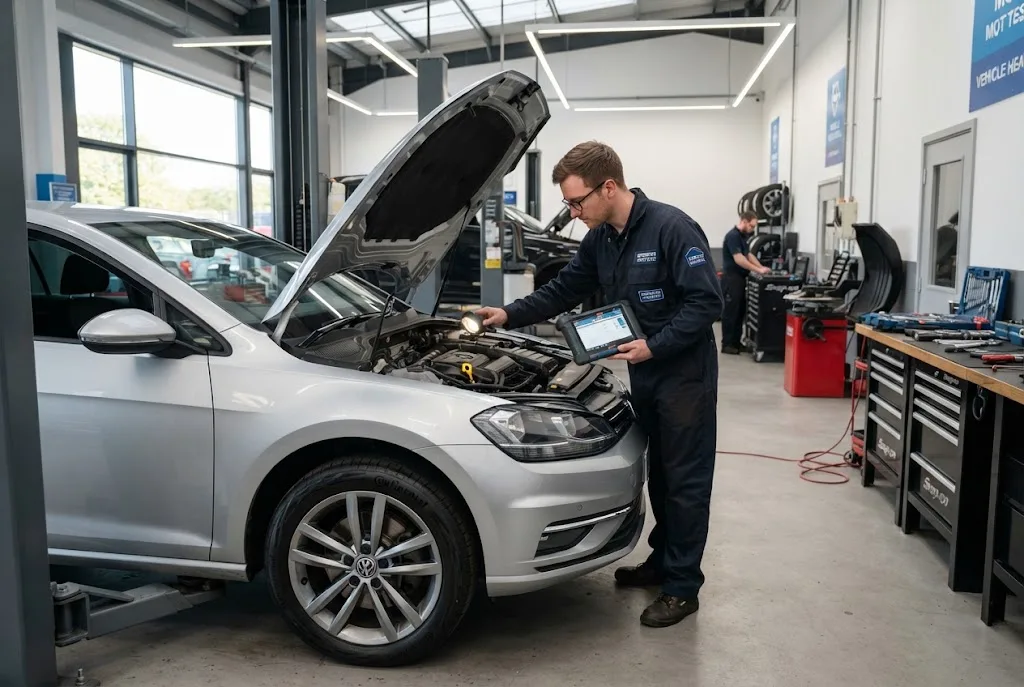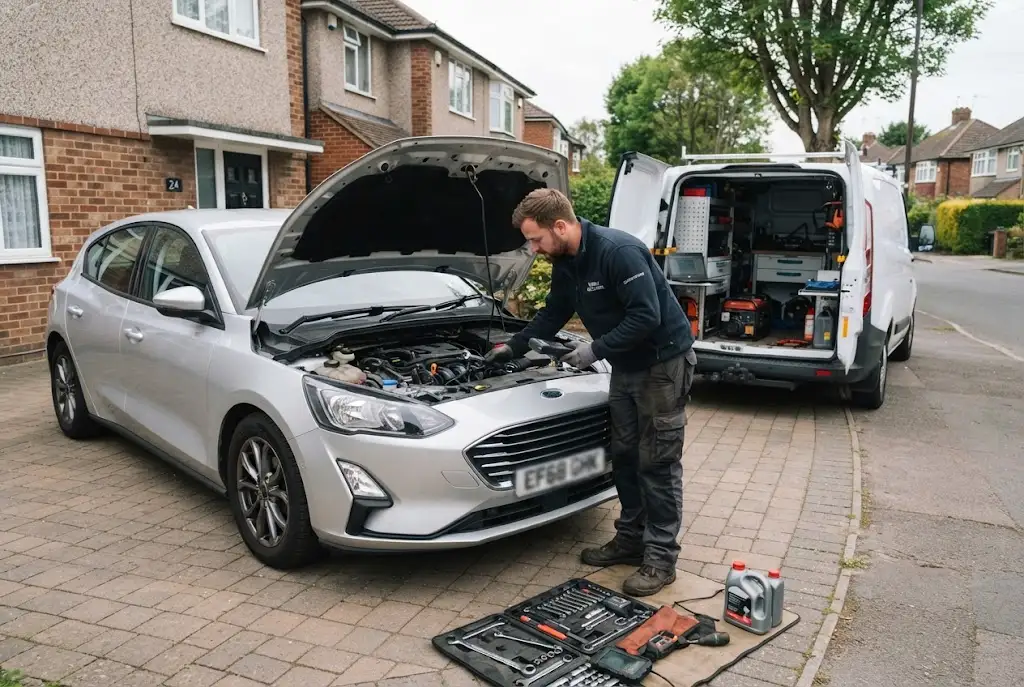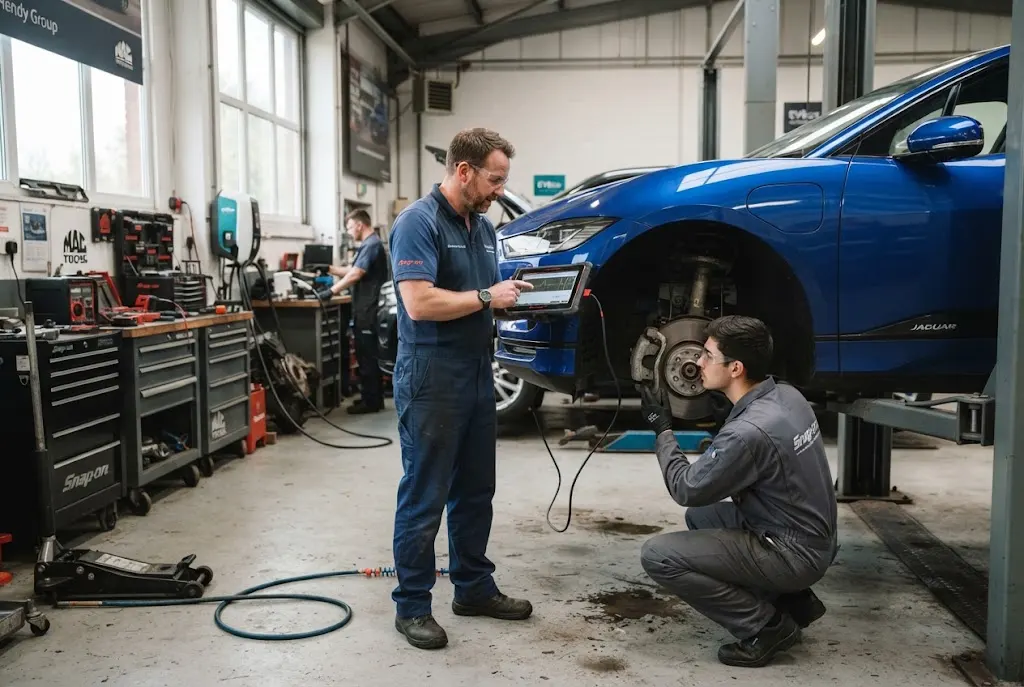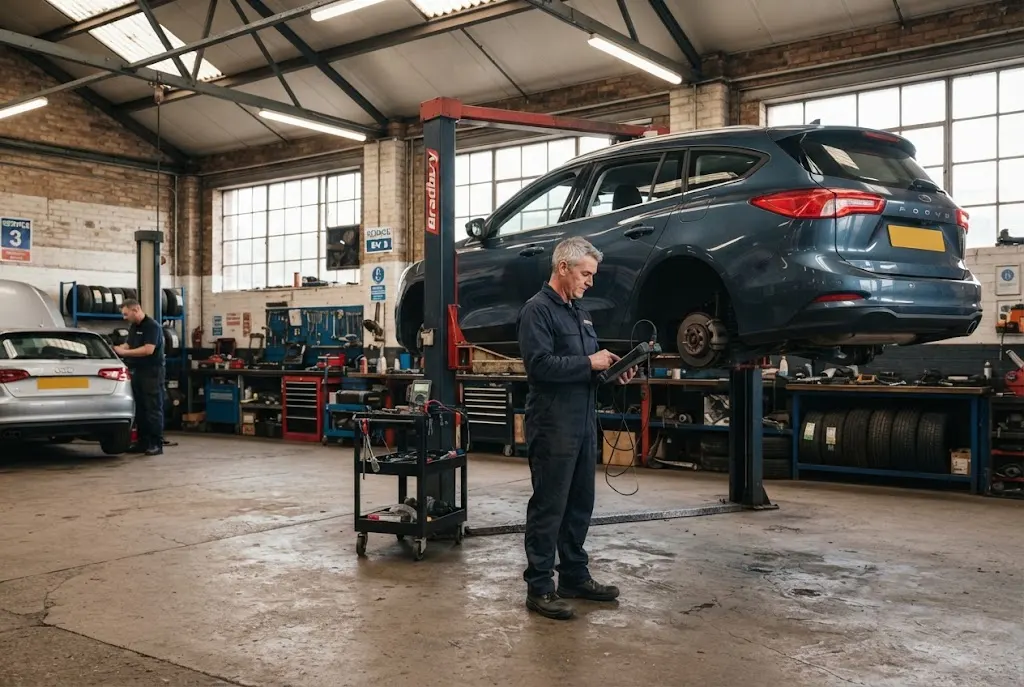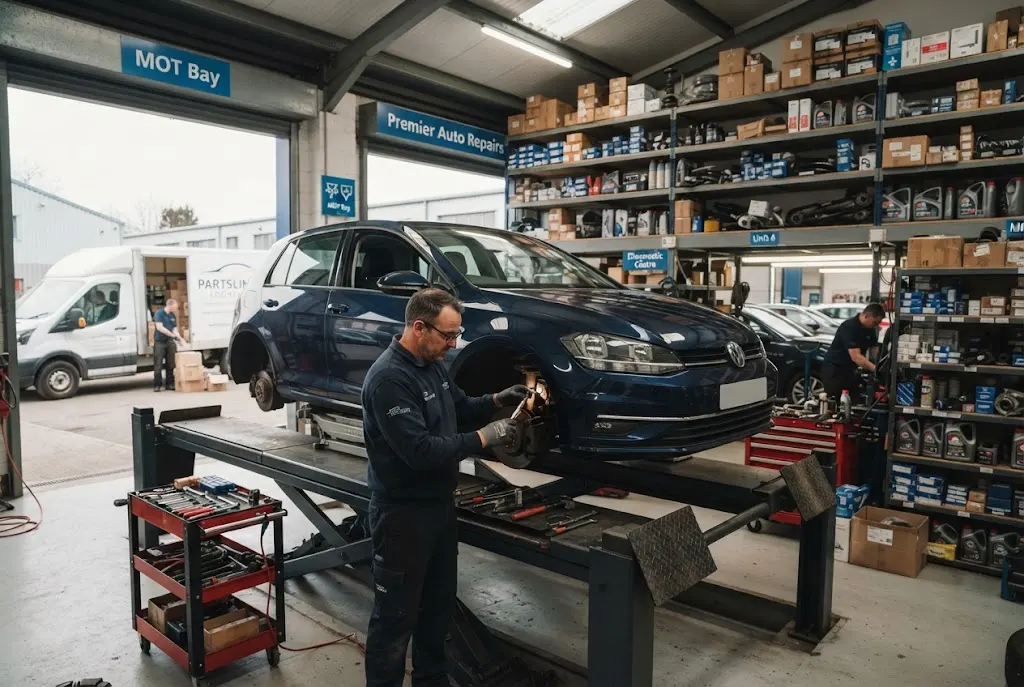

Auto repair services are supported by a much larger network than the workshop a driver sees on the high street. Behind every repair is an interconnected automotive supply chain involving parts manufacturers, distributors, wholesalers, independent workshops, specialist technicians, logistics providers and vehicle technology suppliers. In the UK, this aftermarket network plays an important role in keeping millions of vehicles safe, reliable and roadworthy.
The modern repair industry is also changing. Electric vehicles, advanced driver assistance systems, increasingly connected vehicles and more complex diagnostics are altering what workshops need from their supplier networks. At the same time, access to parts, technical information, skilled labour and efficient distribution remains essential for maintaining repair capacity across the country.
Why Auto Repair Services Depend on the Aftermarket Supply Chain
A vehicle repair rarely starts and ends inside one garage. A workshop may diagnose a fault, identify the required component, order it from a parts supplier, receive it through an aftermarket distribution network and then complete the installation and testing. Each stage needs to work efficiently if the customer is to receive a timely repair.
This makes the automotive aftermarket a connected ecosystem rather than a collection of separate businesses. Parts availability affects workshop productivity, while workshop demand influences wholesalers and manufacturers. Logistics providers then connect those businesses by moving components between distribution centres, suppliers and repair locations.
The scale of the UK market reflects this complexity. The Society of Motor Manufacturers and Traders (SMMT) reported in 2025 that the wider aftermarket sector included more than 56,500 businesses, supported 346,000 jobs and generated £16.1 billion in gross value added. The sector covers vehicle maintenance and repair as well as the wholesale and retail distribution of parts and accessories.
How the UK Automotive Supply Chain Supports Repairs
The automotive supply chain supporting repairs can be viewed as several connected layers. Understanding these layers helps explain why a seemingly simple replacement part can involve a substantial commercial and logistical network.
Parts manufacturers and component suppliers
At the production end are companies manufacturing replacement components, consumables and specialist equipment. Depending on the vehicle and repair, this can include braking components, filters, batteries, lighting equipment, suspension parts, electrical components, bodywork items and many other products.
The growing complexity of vehicles is also increasing demand for specialist components and diagnostic technology. Modern workshops increasingly need access to equipment capable of communicating with sophisticated vehicle systems, rather than relying solely on traditional mechanical tools.
Wholesalers and distributors
Parts wholesalers form an important bridge between manufacturers and workshops. They hold stock, manage product ranges and coordinate deliveries so garages can obtain the components needed for customer vehicles.
Efficient aftermarket distribution can have a direct effect on workshop productivity. If a commonly required component is available quickly, a repair may be completed without a vehicle occupying valuable workshop space for an extended period. Conversely, supply delays can create additional scheduling and customer-service pressures.
Independent workshops and service businesses
Independent workshops are a major part of the UK repair landscape. They serve local communities, maintain a broad range of vehicle brands and often compete by combining technical expertise with convenience and personal service.
The independent aftermarket has historically held a significant position in the UK market. That role makes supplier access particularly important because smaller workshops may depend heavily on reliable distributors for parts availability, technical support and delivery services.
The Spare Parts Market Is Becoming More Complex
The spare parts market has to respond to a vehicle parc that includes many different makes, models, powertrains and technology generations. A workshop may therefore need to source parts for older petrol and diesel vehicles while also supporting hybrids and fully electric vehicles.
Vehicle electrification does not eliminate the need for an aftermarket. Instead, it changes the type of expertise, equipment and components required. Electric vehicles still need inspection, maintenance, diagnostics, tyres, braking-system work, suspension repairs and other forms of servicing. However, high-voltage systems and new vehicle architectures introduce additional technical requirements.
SMMT reported in September 2025 that 81.2% of surveyed automotive aftermarket workshops had invested in training, talent and tooling for newer vehicle technologies, including electric vehicles and advanced safety systems. This illustrates how investment in workshop capability is becoming closely connected to the evolution of the vehicle parc.
Repair Capacity Depends on More Than Parts
Parts availability is only one part of repair capacity. Workshops also need qualified technicians, appropriate diagnostic equipment, technical information, suitable premises and efficient operating processes.
This becomes particularly important as vehicles incorporate more electronic systems. A technician working on a modern vehicle may need to understand software-linked diagnostics, electronic control systems, calibration procedures and high-voltage safety requirements alongside traditional mechanical skills.
For workshop operators, investment therefore extends beyond keeping shelves stocked. Training programmes, diagnostic tools and specialist equipment can all influence whether a business is prepared to handle the vehicles arriving at its premises.
Supplier Networks and Industry Resilience
Strong supplier networks can help the repair industry respond when market conditions become difficult. Automotive businesses have experienced disruption from global logistics challenges, changing trade conditions, technology transitions, rising operating costs and shortages of specialist skills.
Industry resilience depends partly on having diverse and dependable supply routes. A resilient aftermarket can respond more effectively when individual products become difficult to source or when demand changes unexpectedly.
The SMMT continues to identify supply-chain resilience as an important issue for the wider UK automotive sector. Its current resilience programme highlights pressures including geopolitical uncertainty, market volatility, rising costs, skills shortages, localisation requirements, cybersecurity risks and electrification.
Why Distribution Speed Matters to Independent Workshops
For an independent garage, time is an important commercial resource. A vehicle occupying a ramp while a required component is unavailable can affect the day’s schedule and reduce the workshop’s ability to take on additional work.
Fast and dependable distribution can therefore support both customer experience and workshop efficiency. Local stock availability, accurate parts identification and reliable delivery schedules all help technicians spend more time repairing vehicles and less time waiting for components.
This relationship is particularly relevant to smaller businesses. Independent workshops may not have the purchasing power or storage capacity of larger organisations, making their relationships with parts suppliers and distributors an important part of day-to-day operations.
Technology Is Reshaping the Aftermarket
Digitalisation is changing how the automotive aftermarket operates. Online ordering, electronic catalogues, digital diagnostics, workshop management systems and increasingly connected vehicles are influencing how parts and repair information move through the industry.
At the same time, vehicle manufacturers and aftermarket businesses are adapting to the growth of electric powertrains and advanced driver assistance systems. SMMT’s 2025 aftermarket research highlighted the need for continued investment in skills and tools as vehicle technology develops.
For consumers, these changes may be largely invisible. A driver may simply expect a garage to diagnose a fault and complete the repair. Behind that experience, however, businesses across the supply chain must continually update their systems, knowledge and equipment.
The Future of Auto Repair Services in the UK
The future of auto repair services will be shaped by the vehicles already on UK roads as well as the technologies entering the market. Petrol and diesel vehicles will remain an important part of the vehicle parc for years, while hybrids and electric vehicles will continue to increase the technical diversity of the aftermarket.
This means the repair industry is unlikely to follow a single path. Some businesses will specialise in particular technologies or vehicle types, while others will continue offering broad mechanical and servicing capabilities.
For suppliers, the challenge will be maintaining efficient distribution while adapting product ranges to changing vehicle technology. For workshops, the challenge will involve balancing investment in equipment and training with customer demand and business costs.
Building a More Resilient UK Aftermarket
A strong aftermarket ultimately depends on cooperation between the businesses that manufacture, distribute, service and maintain vehicles. Reliable parts availability is important, but so are skilled technicians, technical information, modern diagnostic equipment and sustainable business models.
The UK already has a diverse network of manufacturers, distributors, independent workshops and specialist service providers. Maintaining that diversity while adapting to electrification and increasingly sophisticated vehicle technology can help preserve consumer choice and access to repair services.
For drivers and fleet operators, the result is practical: vehicles need to remain safe and usable throughout their working lives. The businesses supporting that goal form an extensive network that reaches far beyond the garage forecourt.
As the UK automotive market continues to evolve, understanding this wider ecosystem also helps explain the economics of vehicle maintenance, the changing role of the auto service garage, the development of auto care services and the growth of mobile auto service models.
These connected areas will increasingly determine how the UK’s repair sector responds to changing customer expectations, vehicle technology and the continuing need for dependable mobility.
For authoritative industry context, the SMMT Aftermarket Report provides current information on the UK’s automotive aftermarket, its economic contribution and the changes affecting workshops and repair businesses.