
Vehicle maintenance is one of the most important responsibilities that comes with owning or operating a car in the UK. Regular maintenance helps drivers monitor the condition of their vehicles, identify developing faults and plan necessary work before minor issues potentially become more complicated and expensive.
Maintenance also has an important role in the wider automotive aftermarket. From independent garages and specialist workshops to parts suppliers and fleet operators, a large network of businesses supports motorists throughout the life of a vehicle. Understanding how vehicle maintenance works can therefore help both individual drivers and businesses make better decisions about operating costs and long-term ownership.
What Is Vehicle Maintenance?
Vehicle maintenance refers to the planned and reactive work carried out to keep a vehicle in suitable operating condition. It can include routine servicing, inspections, replacement of worn components, fluid changes, tyre checks, brake maintenance and other manufacturer-recommended tasks.
Some maintenance is scheduled according to time or mileage. Other work becomes necessary because a driver notices a warning light, unusual noise, fluid leak, change in handling or another sign of a developing problem.
The exact requirements differ between vehicles. A modern electric car, for example, does not have the same maintenance needs as a conventional petrol or diesel vehicle. Likewise, a high-mileage commercial van may require a different maintenance approach from a privately owned car that is driven occasionally.
Why Vehicle Maintenance Matters
Regular vehicle maintenance provides an opportunity to assess important components before they deteriorate further. It can also help motorists identify maintenance requirements and understand the condition of their vehicle over time.
Safety is another major consideration. Brakes, tyres, steering, suspension, lights and other systems all contribute to safe vehicle operation. Proper maintenance does not guarantee that a component will never fail, but it can help identify obvious wear or faults that require attention.
Maintenance can also support reliability. A vehicle that is routinely inspected and maintained is easier to manage than one where servicing and repairs are repeatedly postponed without considering the manufacturer’s recommendations.
Understanding Vehicle Maintenance Schedules
Vehicle maintenance schedules provide guidance on when particular checks or replacement tasks should be completed. Manufacturers may specify intervals based on mileage, elapsed time or a combination of both.
The vehicle handbook or manufacturer’s official service information should be the primary reference because maintenance schedules vary between models and powertrains.
Some vehicles also use onboard systems to provide service reminders. These can make it easier for owners to recognise when routine maintenance is approaching.
Time-Based Maintenance
Some maintenance tasks are recommended after a particular period even if the vehicle has travelled relatively few miles. Fluids, filters and other components can have time-related maintenance requirements.
Mileage-Based Maintenance
Other tasks are linked primarily to mileage because certain components experience wear as a vehicle accumulates kilometres or miles. High-mileage vehicles may therefore require more frequent attention to particular systems.
Driving Conditions
Usage can also influence maintenance requirements. Frequent short journeys, heavy traffic, towing and demanding driving conditions may place different stresses on a vehicle than regular motorway journeys.
For this reason, drivers should consider their actual usage when discussing maintenance requirements with a qualified workshop rather than relying solely on a generic online schedule.
Preventive Vehicle Maintenance
Preventive maintenance focuses on addressing scheduled maintenance needs and identifying potential problems before they become more disruptive. It is particularly useful for owners who want greater predictability over their vehicle-related spending.
Simple checks can form part of this approach. Drivers can monitor tyre condition, warning lights, fluid levels where appropriate and any noticeable changes in vehicle behaviour. A professional inspection can then provide a more detailed assessment when servicing is due or concerns arise.
Preventive maintenance is also closely connected to car servicing in the UK. Routine servicing provides a structured opportunity for a professional to inspect the vehicle and complete manufacturer-recommended maintenance tasks.
Common Vehicle Maintenance Tasks
The exact maintenance checklist depends on the vehicle, but several areas commonly require attention throughout a vehicle’s life.
- Engine oil and filters: Relevant to vehicles that use internal combustion engines and subject to manufacturer specifications.
- Brakes: Brake pads, discs and other components can wear with use and may need inspection or replacement.
- Tyres: Tread, pressure, condition and other factors should be checked regularly.
- Battery: Conventional and high-voltage vehicle systems have different battery maintenance considerations.
- Fluids: Vehicles may require monitoring of coolant, brake fluid and other specified fluids.
- Suspension and steering: These systems can affect ride quality, handling and safety.
- Lights and electrical systems: Regular checks can identify failed bulbs, warning indicators and other electrical issues.
- Air conditioning: Cooling performance and system condition may require professional attention.
Not every task needs to be completed at every service. The correct maintenance schedule depends on the manufacturer’s requirements and the vehicle’s condition.
Vehicle Maintenance Costs in the UK
Maintenance spending can vary significantly from one vehicle to another. Make, model, age, mileage, powertrain, parts prices, labour rates and the type of work required can all influence the final cost.
Routine maintenance is generally easier to budget for because it can be planned in advance. Unexpected repairs are more difficult to predict and may involve significant component replacement or diagnostic work.
This is one reason why owners should distinguish between routine maintenance and repair costs when considering the economics of vehicle ownership.
For example, replacing a scheduled service item is part of planned maintenance, whereas repairing a failed component is an unplanned cost that may arise outside the normal service schedule.
Vehicle Maintenance and Ownership Economics
Maintenance forms an important part of the total cost of owning a vehicle. Purchase price and fuel are often the most visible expenses, but owners may also need to account for servicing, repairs, tyres, insurance, taxation and other running costs.
A lower purchase price does not necessarily mean a vehicle will be cheaper to operate over several years. Conversely, paying more for a vehicle does not guarantee lower maintenance costs.
The most useful approach is to consider the complete ownership picture. A vehicle’s age, mileage, reliability history and expected maintenance requirements can all influence whether keeping it remains financially sensible.
Older Vehicles and Maintenance Demand
The age of the UK’s vehicle fleet has an important effect on maintenance demand. Older vehicles can remain on the road for many years, creating continuing demand for servicing, repairs and replacement components.
Age does not automatically mean that a vehicle is unreliable. However, components naturally experience wear and some parts may eventually need replacement as a vehicle accumulates mileage and years of use.
For owners of older cars, maintenance decisions can therefore become increasingly important. Spending money on appropriate repairs may make sense when compared with the cost of replacing the vehicle, but each situation needs to be assessed individually.
Vehicle Maintenance for Electric and Hybrid Cars
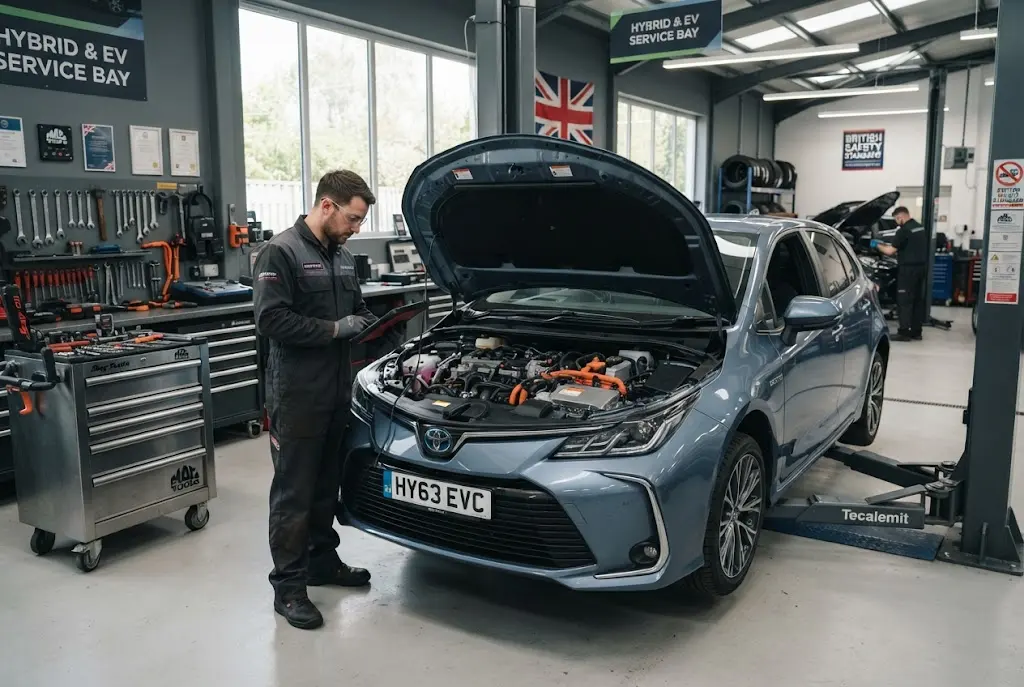
Electric and hybrid vehicles have introduced new considerations for the UK’s maintenance sector. Electric cars generally have fewer traditional engine components, but they still contain tyres, brakes, suspension, steering, electrical systems and other components that require attention.
High-voltage systems require appropriate training and safety procedures. Workshops servicing electric and hybrid vehicles therefore need suitable knowledge, equipment and working practices.
Regenerative braking can also influence brake wear patterns on some electric and hybrid vehicles, although maintenance requirements remain specific to each vehicle.
The transition towards electrification means the modern workshop increasingly needs to understand both conventional mechanical systems and newer electrical technologies.
Vehicle Maintenance and Diagnostic Technology
Today’s vehicles rely heavily on electronic systems. Diagnostic equipment can help technicians identify faults that may not be visible through a basic physical inspection.
A warning light, for example, may indicate a problem that requires electronic diagnosis before a technician can determine the appropriate repair. Modern diagnostic work therefore forms an increasingly important part of professional vehicle maintenance.
Advanced driver assistance systems add further complexity. Cameras, radar sensors and other components can require specialist inspection or calibration after certain repairs.
For vehicle owners, this makes workshop capability an important consideration when choosing where to have maintenance or repairs carried out.
Vehicle Maintenance for Fleets
Fleet maintenance is particularly important for businesses that depend on vehicles for daily operations. A vehicle that is unavailable can potentially affect deliveries, appointments, field services or other commercial activities.
Fleet operators therefore often use planned maintenance schedules to manage vehicle availability and operating costs. Keeping service records organised can also help businesses monitor recurring problems and anticipate upcoming maintenance requirements.
The scale of fleet maintenance varies considerably. A small business operating a handful of vans may have different requirements from a large organisation managing hundreds of vehicles.
Regardless of fleet size, planned maintenance can provide greater visibility into vehicle condition and help operators make more informed decisions about repairs, replacement and operating costs.
When Vehicle Maintenance Becomes a Repair
Maintenance and repairs often overlap, but they are not exactly the same. Scheduled maintenance is planned in advance, while repairs are usually performed to correct a fault or component failure.
A service inspection may identify a worn brake component, damaged suspension part or electrical fault. At that point, the required work becomes a repair alongside the routine maintenance activity.
Drivers should ask for a clear explanation of any additional repair work before authorising it. Understanding the difference between recommended maintenance and urgent repairs can make workshop conversations much easier.
For more information about the wider repair market, see our guide to auto repair services in the UK.
How to Manage Vehicle Maintenance More Effectively
A structured maintenance approach can make vehicle ownership easier to manage. Owners can start by keeping track of service dates, mileage and completed work.
It is also useful to respond promptly to warning lights and noticeable changes in vehicle behaviour. Delaying an inspection does not necessarily reduce the eventual cost and can sometimes allow an underlying issue to develop further.
Another useful habit is to choose a workshop with appropriate experience and diagnostic capability for the vehicle. This is particularly relevant for newer cars, hybrids and electric vehicles.
Finally, owners should follow the manufacturer’s recommended schedule while considering the vehicle’s actual usage and condition.
Vehicle Maintenance and MOT Requirements
Vehicle maintenance should not be confused with an MOT test. An MOT assesses whether a vehicle meets specific legal requirements at the time of testing, while maintenance is intended to keep the vehicle in appropriate operating condition.
A car can pass an MOT and still require routine servicing or other maintenance. Likewise, completing a service does not replace the legal requirement for an MOT where one applies.
Understanding the relationship between these two areas can help drivers plan their vehicle-related responsibilities more effectively. Our guide to MOT and service requirements covers this distinction in more detail.
The Economics of Preventive Maintenance
Preventive maintenance is not about eliminating every unexpected expense. No maintenance strategy can guarantee that a vehicle will never suffer a mechanical or electrical failure.
Instead, the objective is to manage predictable maintenance requirements and identify potential problems in a timely way. This can make spending more predictable and provide owners with better information when deciding whether to repair, maintain or eventually replace a vehicle.
For businesses, the same principle can be applied to fleet operations. Planned maintenance can be incorporated into wider budgeting and vehicle replacement decisions, helping operators understand the relationship between maintenance investment and operating costs.
Future Trends in Vehicle Maintenance
The vehicle maintenance market is likely to continue evolving alongside the UK’s changing vehicle fleet. Electrification, connected vehicles, advanced diagnostics and driver assistance systems are all influencing workshop requirements.
At the same time, conventional petrol and diesel vehicles will remain part of the UK’s vehicle parc for many years. This means workshops need to manage a mixed market rather than immediately replacing traditional mechanical expertise with new technology.
Technician training will remain particularly important. Automotive professionals increasingly need knowledge spanning mechanical systems, electronics, diagnostics and high-voltage technology.
For vehicle owners, the result is a maintenance market with more specialised requirements but also more sophisticated tools for identifying faults and managing vehicle condition.
Making Vehicle Maintenance Part of Long-Term Ownership
Vehicle maintenance should be considered a normal part of the ownership lifecycle rather than something that only happens when a car breaks down. Following the appropriate maintenance schedule, monitoring the vehicle’s condition and using qualified professional support can help owners make informed decisions throughout the vehicle’s life.
The UK’s changing vehicle fleet means maintenance requirements will continue to diversify. Traditional mechanical servicing will remain relevant, while electric powertrains, digital diagnostics and advanced vehicle systems will create new demands for workshops.
Ultimately, good maintenance is about understanding what a vehicle needs, when it needs it and why the work matters. By taking a planned approach, motorists and fleet operators can better manage maintenance spending, operating costs and the practical realities of long-term vehicle ownership.
The wider UK auto services industry will continue to adapt to these changing requirements, making vehicle maintenance an important part of both the consumer automotive market and the broader aftermarket economy.