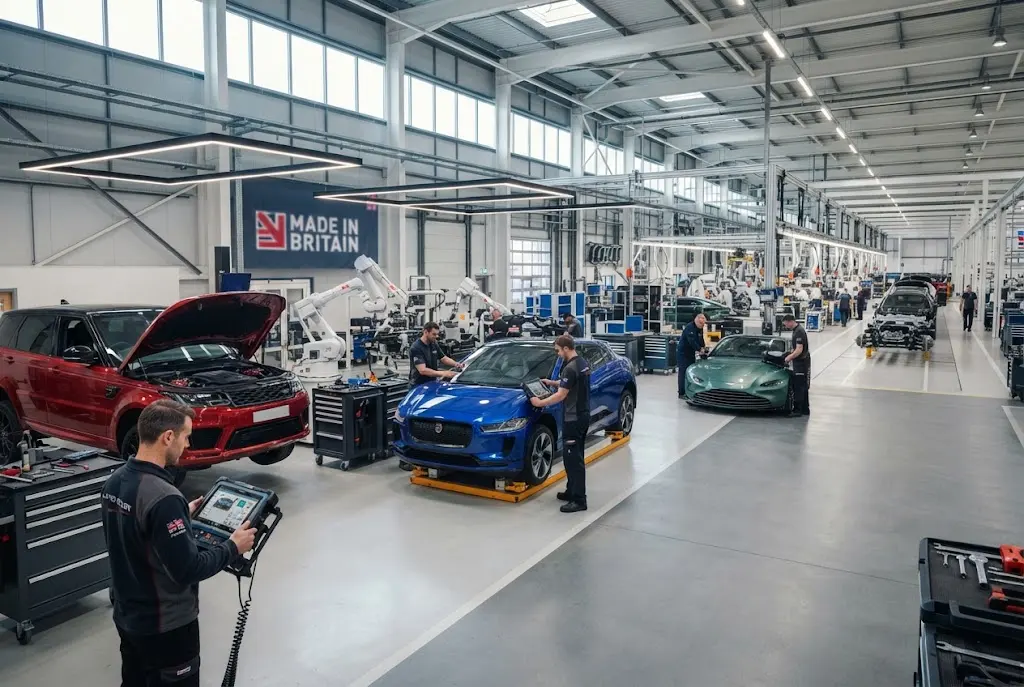

Car servicing is a fundamental part of vehicle ownership in the UK. Regular servicing helps motorists keep their cars in good condition, identify developing faults and maintain important mechanical and safety systems. It also creates consistent demand for garages, workshops, parts suppliers and other businesses across the UK’s automotive aftermarket.
The car servicing market has changed considerably as vehicles have become more advanced. Modern cars can combine sophisticated electronics, connected systems, hybrid powertrains and electric technology with traditional mechanical components. As a result, servicing today involves more than simply changing engine oil and checking a few basic components.
What Is Car Servicing?
Car servicing is a scheduled inspection and maintenance process designed to assess a vehicle’s condition and complete maintenance tasks recommended for its age, mileage and specification. The exact work depends on the vehicle manufacturer’s service schedule and the type of service being carried out.
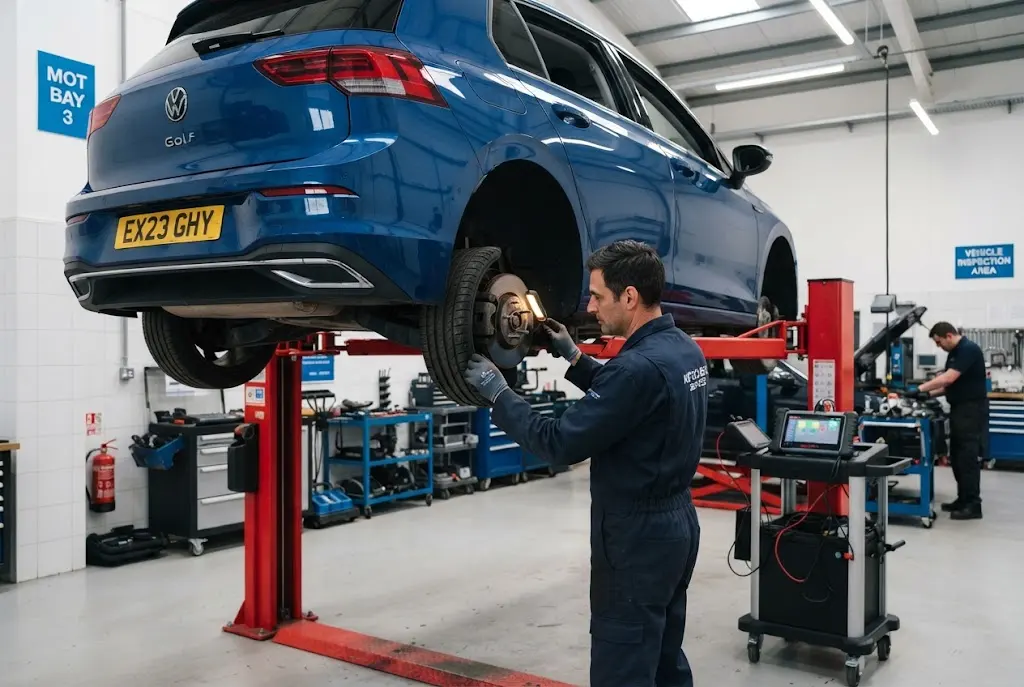
A typical service may involve checks of the brakes, tyres, lights, steering, suspension, fluid levels and other components. Depending on the service interval, technicians may also replace items such as engine oil and filters.
Servicing should not be confused with repairing a known fault. A repair addresses a specific problem, while servicing is generally planned maintenance intended to assess and maintain the vehicle before problems become more serious.
Why Car Servicing Matters for UK Drivers
Regular maintenance provides motorists with a clearer understanding of their vehicle’s condition. It can help identify worn components and developing issues that might otherwise go unnoticed during everyday driving.
Servicing can also support long-term ownership. A vehicle that receives appropriate maintenance is easier to manage because owners have a documented maintenance history and a better picture of its condition.
However, servicing cannot guarantee that a vehicle will never develop a fault. Components can fail unexpectedly, and the appropriate maintenance requirements vary considerably between different makes, models, powertrains and driving conditions.
Types of Car Servicing
Interim Service
An interim service is generally designed for vehicles that cover higher annual mileage or follow shorter maintenance intervals. It provides a scheduled opportunity to inspect key components and carry out routine maintenance between more comprehensive services.
The exact checklist varies between manufacturers and garages. Therefore, motorists should check what is included rather than assuming every interim service is identical.
Full Car Service
A full car service is more comprehensive than an interim service and normally involves a broader range of inspections and maintenance tasks. Depending on the vehicle’s service schedule, technicians may inspect or replace several consumable items and assess important mechanical systems.
For many motorists, a full service forms an important part of planned vehicle maintenance. It can also provide an opportunity to discuss unusual noises, warning lights, changes in handling or other concerns with a technician.
Major Service
A major service is typically the most extensive routine service in a manufacturer’s maintenance cycle. It may include additional inspections and replacement of components that are not necessarily changed at every service interval.
Because manufacturers use different schedules, the term “major service” does not represent one universal checklist. Vehicle owners should follow the servicing requirements specified for their particular car.
How Often Should a Car Be Serviced?
There is no single servicing interval that applies to every car in the UK. Manufacturers establish maintenance schedules based on factors such as vehicle design, engine or powertrain technology, mileage and time.
Some vehicles use mileage-based intervals, while others also specify a maximum period between services. Driving conditions can matter too. Frequent short journeys, heavy traffic, towing and demanding operating conditions may affect maintenance requirements.
The vehicle handbook or manufacturer’s digital service information is therefore the best starting point when determining when a service is due.
What Happens During a Car Service?
The precise process depends on the vehicle and service level, but a workshop may carry out a combination of visual inspections, fluid checks, component assessments and scheduled replacements.
- Checking engine oil and replacing it where required
- Inspecting or replacing relevant filters
- Checking brake components
- Inspecting tyres and checking their condition
- Checking lights and visible electrical components
- Inspecting steering and suspension components
- Checking fluid levels and visible leaks
- Assessing warning lights and electronic systems where appropriate
- Checking other manufacturer-specified service items
A responsible workshop should explain additional repairs that fall outside the agreed service before carrying out chargeable work, particularly where the work is not immediately necessary for the scheduled service.
Car Servicing and the UK Garage Industry
The UK’s garage industry forms an important part of the automotive aftermarket. Independent workshops, manufacturer networks and specialist businesses all compete to provide servicing and repair services to motorists.
Research from the Society of Motor Manufacturers and Traders has highlighted the significant scale of the UK’s aftermarket sector, including tens of thousands of workshops supporting motorists across the country.
This means servicing demand does not depend exclusively on new vehicle sales. Once cars are on the road, they continue to require maintenance throughout their ownership period.
The relationship between servicing and the wider UK auto services industry is therefore particularly important when considering the overall automotive sector.
How Vehicle Age Influences Servicing Demand
The age of the UK’s vehicle fleet has an important influence on the servicing market. Older cars can remain in use for many years, creating continued demand for maintenance, repairs and replacement components.
At the same time, newer vehicles can require specialist knowledge because of increasingly sophisticated electronics, hybrid systems, electric drivetrains and advanced driver assistance technology.
This creates a diverse servicing market. One workshop may primarily maintain conventional petrol and diesel vehicles, while another may invest heavily in equipment and training for hybrid and electric vehicles.
Electric and Hybrid Cars Are Changing Servicing
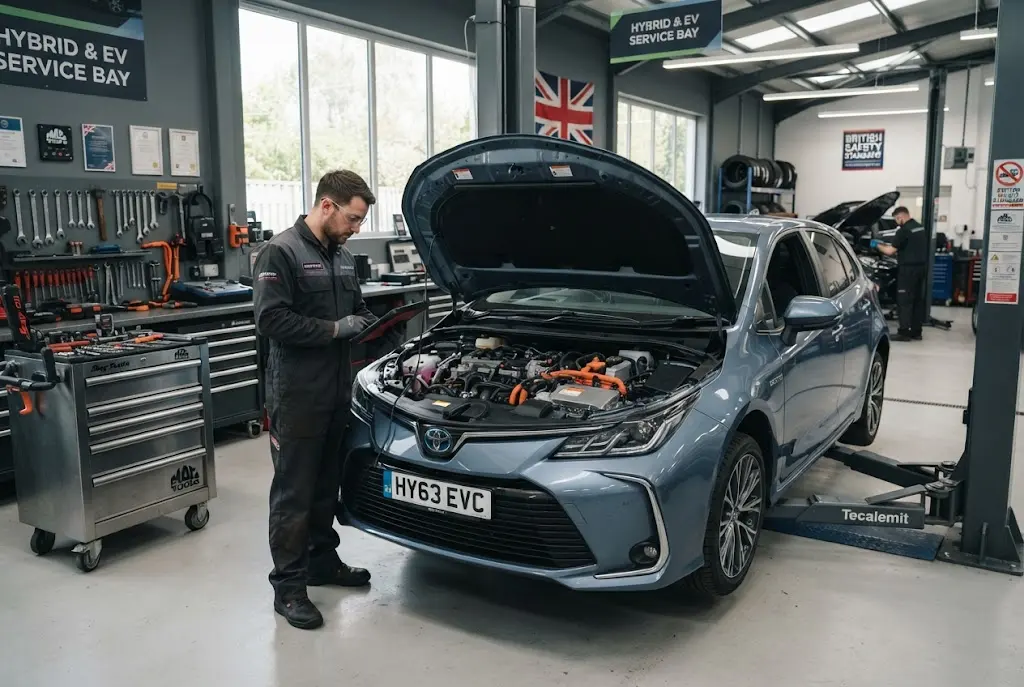
Electric and hybrid vehicles are changing the nature of vehicle servicing in the UK. The Electric cars do not have many of the same engine-related maintenance requirements as conventional petrol and diesel vehicles, but they still require professional inspections and maintenance.
Tyres, brakes, suspension, steering, cooling systems and other components remain relevant. High-voltage systems also require appropriate procedures and technician training when relevant work is undertaken.
The growth of electrified vehicles means workshops increasingly need to combine conventional automotive knowledge with electrical and electronic expertise.
Technology and Modern Vehicle Servicing
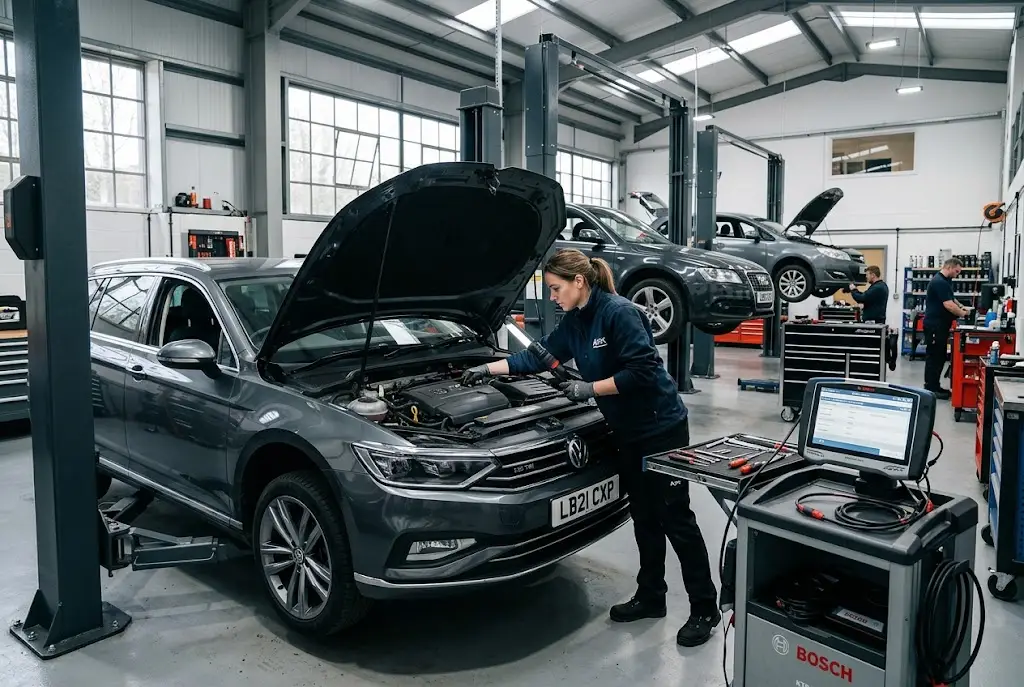
Modern cars rely heavily on electronic control units and sensors. Consequently, diagnostic equipment has become an increasingly important part of workshop operations.
A technician may need to interpret electronic fault information alongside physical inspections. In some cases, repairs can also involve software, sensor calibration or other technology-related procedures.
Advanced driver assistance systems add another layer of complexity. Components such as cameras and radar sensors can support safety and convenience features, but certain repairs or changes may require appropriate calibration.
For motorists, this makes it increasingly important to choose a garage with equipment and expertise suitable for the specific vehicle being serviced.
Car Servicing Costs in the UK
The cost of car servicing varies widely. Factors can include the vehicle’s make and model, engine or powertrain, service level, mileage, location, parts required and labour rates.
An interim service will generally involve a different scope of work from a major service, so comparing prices without comparing what is included can be misleading.
Motorists should ask for a clear explanation of the service package. If additional repairs are identified, the garage should ideally separate those costs from the scheduled servicing work.
Price is important, but it should be considered alongside technician expertise, diagnostic capability, parts quality, workshop standards and customer service.
Car Servicing vs Vehicle Repairs
Servicing and repairs are closely connected but serve different purposes. Servicing is planned maintenance, whereas repairs are undertaken to correct a specific fault or failed component.
For example, a scheduled service might identify worn brake components. Replacing those components would then become repair or maintenance work beyond the routine service itself.
This distinction matters because a service appointment does not necessarily mean every problem with a vehicle will be repaired automatically. A technician may identify an issue that requires further investigation or a separate repair.
Drivers who need broader information about workshop repairs can explore our guide to auto repair services and the wider repair sector.
Choosing a Garage for Car Servicing
When choosing a garage, motorists should consider whether the business has experience with their vehicle type and powertrain. This is especially important for hybrids, electric vehicles and cars with complex electronic systems.
It can also be useful to ask the garage what the service includes, whether manufacturer service requirements are being followed and how additional faults will be communicated.
Clear documentation is another useful consideration. A properly recorded service history can help owners keep track of maintenance and understand what work has previously been completed.
Car Servicing and MOT Testing Are Different
One common source of confusion is the relationship between servicing and MOT testing. An MOT test assesses whether a vehicle meets specific legal standards relating to roadworthiness and environmental requirements at the time of the test.
A service is different. It is a maintenance process intended to help keep the vehicle in appropriate condition. Passing an MOT does not mean that a vehicle has received a service, and completing a service does not automatically mean that an MOT requirement has been fulfilled.
Drivers can learn more about this distinction in our dedicated guide to MOT and service requirements.
The Future of the UK Car Servicing Market
The UK car servicing market is likely to remain important as the vehicle parc continues to evolve. Workshop demand will be influenced by vehicle age, ownership patterns, mileage, economic conditions and the changing mix of petrol, diesel, hybrid and electric vehicles.
At the same time, technological development will continue to reshape workshop requirements. Diagnostic systems, ADAS technology, connected vehicles and electrification are increasing the technical skills needed across the sector.
For garages, this creates both challenges and opportunities. Investment in technician training, diagnostic equipment and appropriate safety procedures can help businesses adapt to a changing market.
For motorists, the main lesson is simpler: servicing should be treated as part of responsible vehicle ownership rather than an optional expense to consider only when something goes wrong.
Understanding the Wider Car Servicing Market
Car servicing sits at the centre of several important developments in the UK automotive aftermarket. It connects vehicle maintenance, workshop activity, parts demand, technician skills and changing vehicle technology.
As cars remain on UK roads for longer and the mix of vehicles becomes more diverse, garages will need to provide both traditional mechanical expertise and modern diagnostic capabilities. Meanwhile, motorists will continue to benefit from understanding their manufacturer’s maintenance requirements and choosing appropriate professional support.
For a broader look at the financial side of keeping vehicles operational, our guide to vehicle maintenance and ownership economics explores why planned maintenance can form an important part of managing long-term vehicle costs.
Ultimately, a well-maintained vehicle is easier to manage, while a capable servicing sector helps keep the UK’s wider automotive ecosystem moving. The market may continue to evolve, but the need for dependable professional vehicle care is unlikely to disappear.