
Mobile auto service is becoming an increasingly visible part of the UK’s vehicle maintenance market. Instead of requiring drivers to take their vehicles to a traditional workshop, mobile mechanics can travel to homes, workplaces and other suitable locations to carry out servicing, diagnostics and selected repairs.
The model combines automotive expertise with a more flexible way of delivering services. For customers, it can reduce the disruption associated with taking a vehicle to a garage. For technicians and entrepreneurs, it creates opportunities to operate as self-employed mechanics, build local businesses and deliver services without the premises and workshop layout associated with a conventional garage.
Mobile servicing is not a replacement for every type of garage work. Larger repairs and jobs requiring specialist workshop equipment may still need a fixed service centre. However, the growth of mobile businesses demonstrates how the UK’s automotive aftermarket is adapting to changing customer expectations and operating models.
What Is Mobile Auto Service?
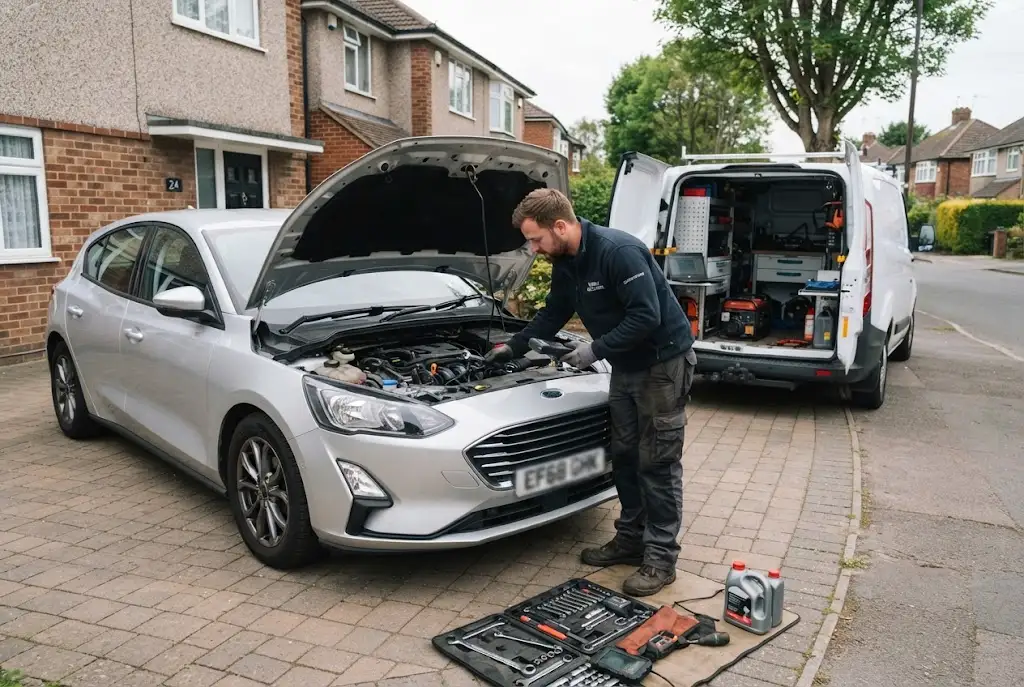
Mobile auto service involves a technician travelling to the customer’s vehicle rather than requiring the vehicle to be taken to a fixed workshop. The technician typically carries tools, diagnostic equipment, replacement parts and other equipment in a suitably equipped van.
Depending on the business and the vehicle, a mobile mechanic may provide routine servicing, diagnostics, battery replacement, brake work, selected mechanical repairs and other maintenance tasks. The precise services available vary because some repairs require equipment that cannot reasonably be transported to a customer’s driveway or workplace.
RAC’s current guidance describes mobile mechanics as bringing the garage to the customer and notes that they can perform servicing, repairs and diagnostics at home or work. The organisation also distinguishes mobile work from larger jobs that are better suited to a conventional garage.
Why Drivers Are Turning to Mobile Mechanics
Convenience is one of the clearest reasons for the growth of mobile servicing. A customer may not need to arrange transport to a garage, wait for the vehicle to be completed or return later to collect it.
Research published by RAC Mobile Mechanics in May 2025 found that 27% of surveyed drivers regarded getting their vehicle repaired or serviced as a hassle. Among those who considered it a hassle, 68% identified the time involved in travelling to and from a garage as their biggest complaint.
This helps explain the appeal of a service that travels to the customer. A technician can potentially work while the vehicle owner remains at home or continues with other activities at their workplace.
Mobile servicing can also be useful when a vehicle is inconvenient to move. However, customers should establish whether a vehicle is safe and legal to drive before arranging a mobile appointment. A mobile mechanic is not necessarily a substitute for roadside recovery or a workshop when a vehicle has suffered a serious fault.
What Can a Mobile Mechanic Do?
A mobile mechanic can undertake a wide range of routine automotive tasks, although the exact scope depends on the technician, equipment and vehicle.
Common examples can include:
- Routine vehicle servicing
- Oil and filter changes
- Battery replacement
- Brake pad and disc work
- Vehicle diagnostics
- Selected mechanical repairs
- Cooling-system checks and repairs
- Some electrical fault diagnosis
- Maintenance inspections
RAC’s current mobile-mechanic guidance lists diagnostics, servicing, battery replacement, brake work and a range of common mechanical repairs among the tasks that can be carried out by mobile technicians.
However, not every repair is suitable for a mobile environment. Jobs requiring vehicle lifts, specialist workshop machinery, extensive dismantling or particular calibration equipment may need to be completed at a fixed service centre.
Mobile Auto Service and the Traditional Garage
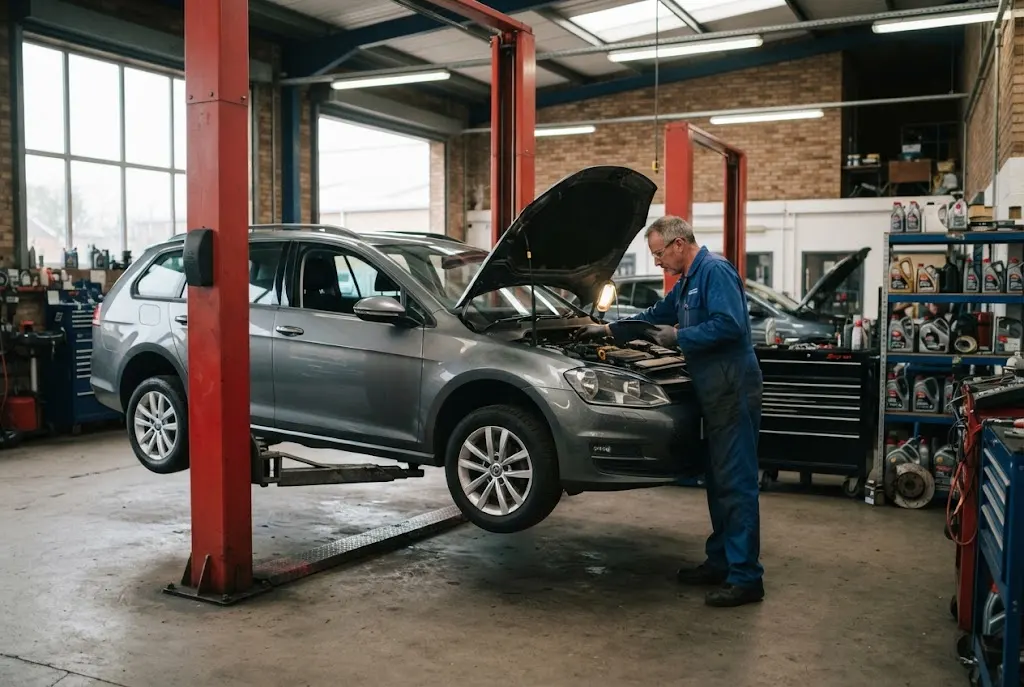
Mobile businesses and traditional garages serve overlapping but different needs. A fixed workshop has permanent equipment, multiple bays and facilities that allow technicians to undertake larger and more complex jobs.
A mobile operation has a different advantage: flexibility. The technician takes the tools and equipment to the vehicle, reducing the need for the customer to travel.
This distinction is important because the two models are not necessarily competitors in every situation. A mobile mechanic may handle a routine repair at a customer’s home and recommend a specialist garage when a more extensive repair is required.
The wider UK aftermarket therefore contains several complementary service models. Conventional workshops, manufacturer-approved service centres, independent garages and mobile businesses can each play different roles in keeping vehicles operational.
Mobile Businesses Can Reduce Customer Downtime
Vehicle downtime can be inconvenient for both private motorists and businesses. A customer who depends on a car for commuting, childcare or other daily activities may find it difficult to leave the vehicle at a garage for an extended period.
For businesses operating vehicles, downtime can have an additional commercial impact. A van that cannot be used may affect appointments, deliveries or field operations.
RAC reported in October 2025 that four in 10 surveyed drivers had been left without their vehicle for a day or more following an unplanned repair. The organisation also reported a four-fold increase in its mobile-mechanic bookings over the previous year.
These figures relate specifically to RAC research and its own mobile service, rather than the entire UK market. Nevertheless, they illustrate why reducing vehicle downtime can be an important part of the mobile-service proposition.
Opportunities for Self-Employed Mechanics
Mobile servicing can also create opportunities for self-employed mechanics. Instead of operating from a traditional workshop, a technician can establish a business around a service vehicle and a defined geographical area.
The business model can potentially reduce some of the costs associated with maintaining a fixed workshop. However, that does not mean a mobile operation is inexpensive to establish or run. A professional service vehicle, tools, diagnostic equipment, insurance, parts inventory, fuel, business administration and marketing can all create significant expenses.
GOV.UK states that a person is generally considered self-employed when they run their own business and take responsibility for its success or failure. Self-employed people may also be able to claim allowable business expenses, including vehicle insurance, repairs, servicing and fuel, subject to the applicable rules.
Anyone starting a mobile automotive business therefore needs to consider both the technical side and the administrative requirements of running a business.
Vehicle and Travel Costs Matter to Mobile Businesses
A mobile technician spends part of the working day travelling between customers. This creates a different cost structure from a technician working continuously inside one workshop.
Fuel, vehicle depreciation, insurance, maintenance and travel time all affect the economics of a mobile operation. Route planning can therefore become an important part of mobile businesses.
GOV.UK currently provides simplified-expense rules for eligible self-employed people using vehicles for business purposes. For the 2026–27 tax year, the simplified mileage rate for cars and goods vehicles is 55p per mile for the first 10,000 business miles and 25p per mile thereafter. The rules have specific eligibility requirements, so mobile operators should check the current HMRC guidance rather than assuming a particular accounting method applies to them.
This illustrates an important point about mobile entrepreneurship: the absence of workshop premises does not eliminate operating costs. It simply changes where those costs occur.
Mobile Auto Service as a Local Enterprise
Many mobile mechanics operate within defined geographic areas, making them naturally suited to local markets. A technician may build a customer base through repeat servicing, recommendations, online searches and relationships with local businesses.
This can create opportunities for local enterprises that understand the needs of their surrounding communities. A mobile technician may serve residential customers, small businesses, fleet operators or other vehicle owners who value convenience.
Digital booking systems can make this model easier to manage. Customers can request appointments online, provide vehicle details and specify the type of work required before the technician arrives.
For a small business, accurate scheduling is particularly important. Travel time between appointments needs to be considered alongside the expected duration of each job. Overbooking can quickly create delays, while excessive travel can reduce productive working time.
Technology Is Expanding Mobile Repair Capabilities
Vehicle technology is changing what mobile technicians need to carry and understand. Modern cars contain increasingly sophisticated electronic systems, meaning diagnostic equipment has become an important part of professional mobile work.
The AA reported in August 2026 that breakdowns associated with body control modules had more than doubled since 2020 to over 36,000 a year. The organisation also highlighted increasing use of mobile mechanics and at-home diagnostic services for technical vehicle problems.
At the same time, electric and hybrid vehicles introduce additional technical and safety requirements. Mobile operators who want to work on these vehicles may need appropriate training, tools and procedures rather than relying solely on conventional mechanical knowledge.
This connects the mobile market with the broader automotive skills and workforce challenge. As vehicle technology changes, mobile technicians need to keep developing their capabilities.
Mobile Service Innovation in the UK
The growth of mobile servicing demonstrates how service delivery can evolve without changing the fundamental need for vehicle maintenance. Drivers still require inspections, repairs and servicing; the difference is where those services take place.
Established automotive organisations are also investing in the model. RAC announced in May 2026 that its mobile servicing and repair operation had reached 300 technicians working across customers’ homes and workplaces.
This does not mean that every automotive repair business should become mobile. The model works particularly well for selected jobs and customer requirements, while fixed garages retain important advantages for complex repairs and specialist equipment.
When a Fixed Garage Is Still the Better Option
Mobile servicing has practical limits. A fixed garage may be more appropriate when a vehicle requires extensive mechanical dismantling, a full range of workshop equipment, specialist lifting equipment or repairs that cannot safely be completed at the customer’s location.
Customers should also consider the environment where the work will take place. A suitable, safe and legally appropriate location is important for any repair performed outside a workshop.
For larger jobs, a conventional auto service garage can provide the facilities required to complete the work efficiently.
The Future of Mobile Auto Service
The UK’s mobile servicing market is likely to remain part of a broader shift towards convenient automotive services. Customers increasingly have access to both fixed workshops and technicians who travel to them, creating more choice in how routine maintenance and selected repairs are delivered.
For technicians, the model offers a route into self-employment or field-based employment. For customers, it can reduce the disruption associated with visiting a garage. Thes For the wider automotive sector, it represents another way to use skilled labour and equipment efficiently.
However, sustainable growth depends on maintaining technical standards, appropriate training, accurate diagnosis and responsible business practices. Convenience is valuable, but it cannot replace competent workmanship or the need to use the right equipment for a particular repair.
As the UK’s vehicle parc continues to change, mobile technicians will increasingly operate alongside traditional garages, parts suppliers and specialist repair businesses. The result is a more varied aftermarket in which customers can choose between different ways of accessing maintenance and repair.
That development also connects mobile servicing with the wider economics of vehicle maintenance and the UK automotive aftermarket supply chain. Together, these parts of the industry show how vehicle ownership is supported by a network of businesses that continues to adapt to changing technology and customer expectations.
For technicians considering self-employment, GOV.UK’s guidance on working for yourself provides official information about starting and running a business in the UK.