
Understanding the difference between an MOT and service is essential for UK motorists. An MOT and service are often arranged together, but they serve different purposes. An MOT checks whether a vehicle meets specific legal requirements at the time of testing, while servicing is planned maintenance intended to help keep the vehicle in appropriate condition.
Knowing how these two processes work can help drivers plan vehicle maintenance, understand garage recommendations and avoid confusion when a vehicle needs both an MOT and additional work. It is also important for garages and automotive businesses operating within the UK’s regulated testing environment.
What Is an MOT and Service?
An MOT is a statutory test that assesses specific parts of a vehicle against defined legal standards. The Driver and Vehicle Standards Agency (DVSA) oversees the MOT scheme in Great Britain, while authorised testing stations and qualified testers carry out the relevant tests.
A service, by contrast, is a maintenance activity. It can include inspections, fluid checks, scheduled replacements and other work recommended by the vehicle manufacturer. The scope depends on the vehicle and its service schedule.
Therefore, an MOT should not be treated as a substitute for servicing. A vehicle can pass an MOT while still being due for a service, and a serviced vehicle can still require an MOT when legally due.
MOT and Service: What Is the Difference?
The easiest way to understand the distinction is to consider the purpose of each process.
- MOT: Checks specified vehicle components against legal testing standards.
- Service: Carries out planned maintenance based on the vehicle’s requirements.
- MOT failure: Identifies defects that result in a failed test according to MOT classifications.
- Repair: Corrects a fault or defective component and may be needed following an MOT or service inspection.
The official GOV.UK guidance confirms that the MOT does not cover the general mechanical condition of a vehicle and does not test the condition of the engine, clutch or gearbox.
This distinction is important because an MOT certificate should not be interpreted as a comprehensive statement that every part of the vehicle is mechanically healthy.
When Does a Car Need an MOT?
For most cars, the first MOT is required when the vehicle reaches three years old. After that, the vehicle generally needs an MOT every year.
The exact rules depend on vehicle type and circumstances. GOV.UK provides the relevant testing requirements and exemptions, so motorists should check the official rules for their particular vehicle rather than relying on a generic assumption.
Some vehicles have different testing arrangements. For example, taxis and certain other vehicle categories can have different first-test or testing intervals, while some historic vehicles and specific exempt vehicles may not require an MOT under particular conditions.
The official MOT guidance should therefore be used when determining whether a particular vehicle needs a test.
What Does an MOT Check?
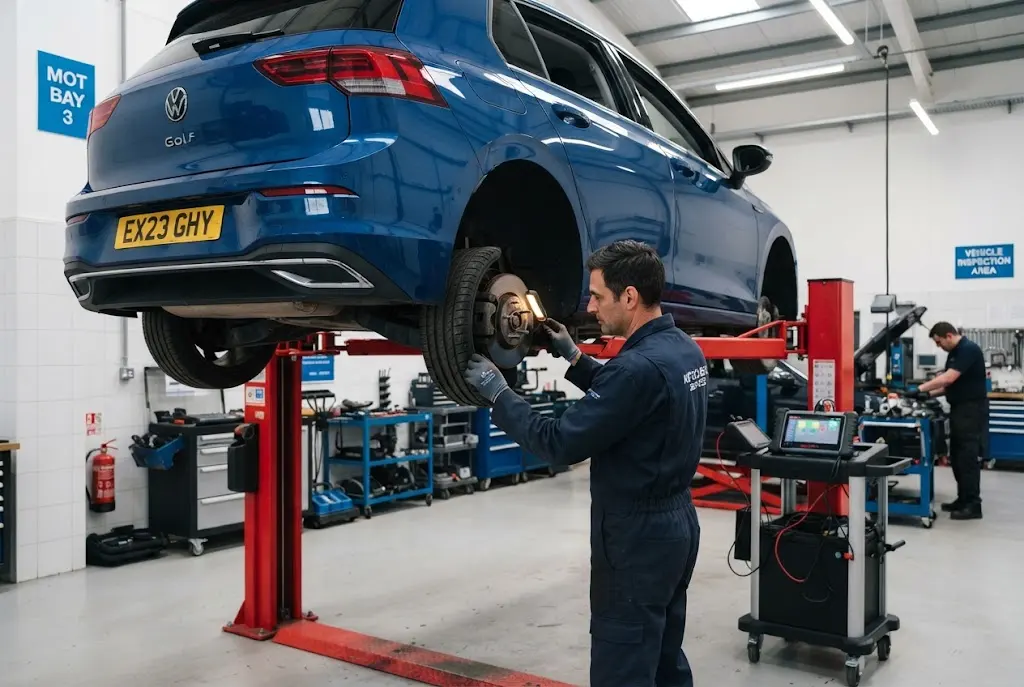
The MOT focuses on specified components and systems that are relevant to roadworthiness and environmental standards. For cars, the inspection can include areas such as brakes, tyres, steering, suspension, lights, seat belts, body and vehicle structure, registration plates, windscreen visibility and other specified items.
The exact inspection requirements are set out in the official MOT inspection manual. The manual is maintained by the DVSA and is updated when testing requirements change.
For example, the current inspection manual covers areas including braking systems, identification, steering and other vehicle components.
Drivers can review the official MOT inspection manual for cars and passenger vehicles when they want to understand the testing framework in greater detail.
What Does a Car Service Include?
A service is not governed by one universal checklist. The work depends on the vehicle manufacturer’s recommendations, mileage, age and sometimes the way the vehicle is used.
Depending on the service interval, a garage may inspect or replace items such as:
- Engine oil and oil filters
- Air or other specified filters
- Brake components
- Tyres and wheels
- Fluid levels and condition
- Steering and suspension components
- Lights and electrical systems
- Cooling system components
- Other manufacturer-specified maintenance items
For a more detailed look at scheduled maintenance, see our guide to car servicing in the UK.
Why an MOT Does Not Replace a Service
The difference between testing and maintenance becomes particularly important when considering what an MOT actually tells a driver.
An MOT checks specific items against defined testing standards. It does not provide a complete mechanical health assessment. GOV.UK specifically states that the test does not cover the condition of the engine, clutch or gearbox.
A service provides an opportunity to carry out maintenance work that may fall outside the MOT inspection. It can also allow a technician to identify developing problems and discuss maintenance requirements with the vehicle owner.
Consequently, completing both when appropriate provides two different forms of vehicle oversight rather than duplicating the same process.
What Happens if a Vehicle Fails Its MOT?
A vehicle can either pass or fail an MOT. A failure occurs when the test identifies defects classified at a level that results in a failed test.
According to GOV.UK, dangerous or major problems can result in an MOT failure. A vehicle may also receive minor or advisory items that should be monitored or addressed even though they do not necessarily cause an immediate failure.
The distinction matters because an advisory is not the same as a failure. However, ignoring advisories indefinitely can allow a developing problem to become more significant.
Where a vehicle has failed, the owner should understand which defects caused the failure and what repairs are necessary before the vehicle is returned for testing.
MOT Repairs and Retesting
When an MOT identifies defects, the vehicle may require repairs before it can receive a pass. The process after a failed test depends on where the repairs are carried out and when the vehicle is returned for a retest.
GOV.UK explains that a partial retest may be available when a vehicle is taken away for repairs and returned to the test centre within 10 working days, depending on the circumstances and items involved.
This is one reason motorists should discuss the repair process with the testing station before taking the vehicle elsewhere.
MOT Test Costs in the UK
The government sets maximum MOT fees that authorised test stations can charge. For a standard car, the current maximum MOT test fee listed by GOV.UK is £54.85.
This is the maximum test fee, not necessarily the total amount a motorist will spend. Repairs, replacement parts, diagnostic work or additional services can increase the overall cost if defects are identified.
A garage may also offer an MOT and service package. When comparing packages, drivers should check exactly what the service includes rather than comparing headline prices alone.
MOT and Service Packages
Many garages allow customers to arrange an MOT and service appointment together. Combining the appointments can be convenient because the vehicle is already at the workshop for both activities.
However, motorists should understand that the service and MOT remain separate processes even when completed during the same visit.
If the technician identifies additional work during the service, the customer should receive an explanation of the issue and the associated cost before authorising chargeable repairs.
A transparent approach helps drivers distinguish between the cost of the statutory test, scheduled maintenance and additional repair work.
Understanding MOT Regulations
MOT regulations are supported by detailed guidance, inspection manuals and rules governing authorised testing stations. These requirements are designed to create consistent testing standards across the MOT network.
The DVSA’s MOT testing guide sets out requirements for authorised examiners, testers, testing stations and the administration of the MOT scheme. The guide was updated in August 2026, demonstrating that the regulatory framework can change over time.
For garages, staying up to date is therefore an operational responsibility rather than a one-time compliance exercise.
Workshop Compliance and MOT Testing
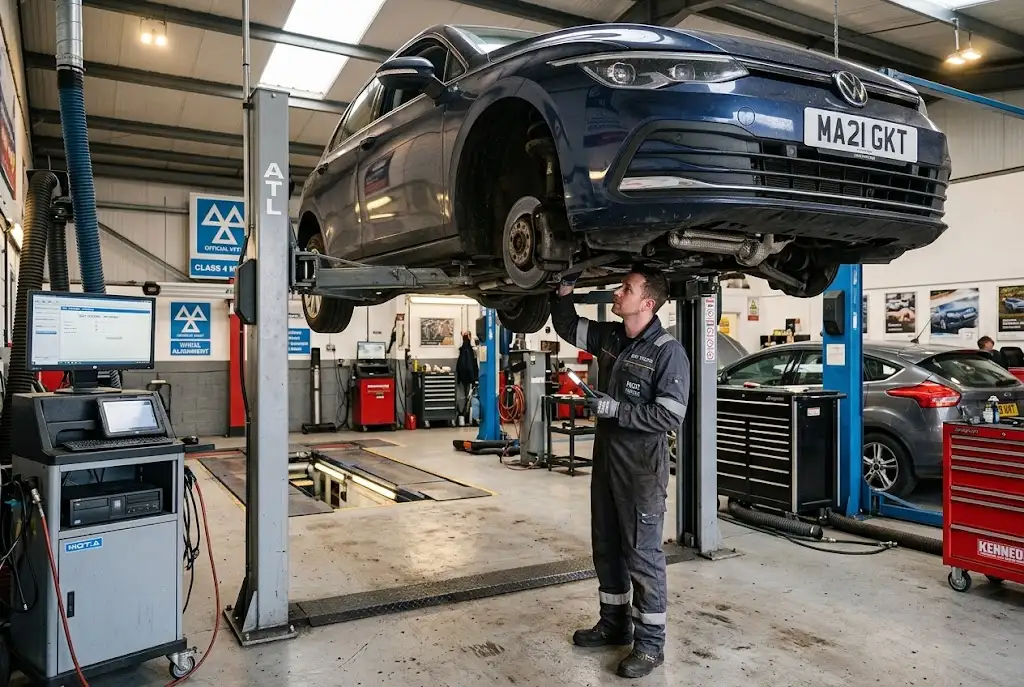
Businesses that conduct statutory MOT tests operate within a specific regulatory framework. Authorised testing stations must meet requirements covering facilities, equipment, procedures, tester responsibilities and other aspects of the testing operation.
The DVSA publishes guidance explaining how MOT testing stations should operate and how testers must comply with the applicable requirements.
There are also annual training and assessment requirements for MOT testers. The 2026–27 assessment information includes updated topics for testers working with cars and passenger vehicles as well as motorcycles.
This ongoing training helps testers remain familiar with current testing procedures and standards.
Recent Changes in the MOT Testing Environment
The MOT framework is not static. The DVSA publishes updates and special notices when changes affect the testing scheme.
For example, 2026 updates have included changes relating to testing administration, vehicle classifications and other operational requirements. The official MOT collection also lists a 2026 special notice concerning the national rollout of photos at test.
This demonstrates why motorists and workshop operators should rely on current official guidance when dealing with specific regulatory questions.
MOT and Service for Electric Vehicles
Electric vehicles are still subject to MOT requirements where applicable. Although their powertrains differ from conventional petrol and diesel cars, they contain many components that remain relevant to roadworthiness testing, including tyres, brakes, steering, suspension, lights and other systems.
Servicing is different. Electric vehicles generally have fewer traditional engine-related maintenance requirements, but they still require appropriate inspections and maintenance.
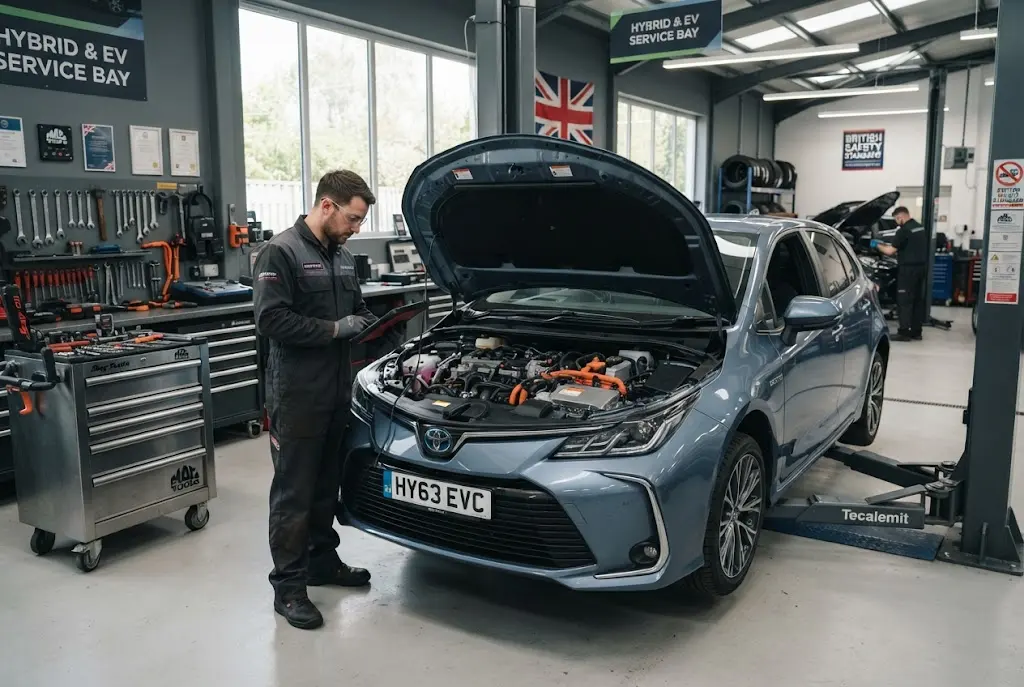
Work involving high-voltage systems requires suitable training and safety procedures. Workshops servicing electric and hybrid vehicles therefore need capabilities appropriate to the technology involved.
The changing vehicle parc means modern garages increasingly need to combine conventional automotive knowledge with electrical and diagnostic expertise.
How Vehicle Maintenance Supports MOT Compliance
Although servicing does not guarantee an MOT pass, regular maintenance can help owners identify potential problems before a test.
Checking tyres, lights, brakes, windscreen visibility and other relevant components as part of normal vehicle care can help motorists address obvious issues before the MOT appointment.
Professional maintenance can also identify problems that a driver may not notice during normal use. However, motorists should not treat a pre-MOT service as a guarantee of passing because the statutory test is conducted according to its own inspection requirements.
This is where the wider vehicle maintenance process fits into responsible ownership.
Choosing a Garage for MOT and Service
When booking an MOT and service, drivers should check that the business is appropriate for both types of work. If the vehicle requires a statutory MOT, the test must be carried out at an authorised testing station.
It is also sensible to ask what servicing package is being provided, which manufacturer requirements are being followed and how additional repairs will be handled.
For modern vehicles, diagnostic capability can be particularly important. Owners of hybrid and electric vehicles should also establish whether the workshop has suitable equipment, training and procedures.
Price is worth considering, but transparency and technical capability should also influence the decision.
MOT and Service Records
Keeping accurate vehicle records can make ownership easier to manage. MOT results are recorded in the official MOT database, and motorists can check their MOT history online.
Service records are separate and should be maintained by the vehicle owner or servicing business. Keeping invoices and service information together can help establish what maintenance has been completed and when.
A well-organised record can be particularly useful when a vehicle is sold because prospective buyers may want evidence of its maintenance history.
Planning Your MOT and Service
Drivers can make vehicle maintenance easier by planning their MOT and service appointments rather than waiting until a problem becomes urgent.
Checking the MOT expiry date in advance gives motorists time to arrange a test and deal with potential repairs. Service dates should be tracked separately according to the manufacturer’s recommended schedule.
It can also be useful to avoid assuming that an MOT appointment automatically covers all routine maintenance. Asking the garage exactly what is included can prevent confusion.
Why MOT and Service Knowledge Matters
Understanding the difference between an MOT and service helps motorists make better decisions about vehicle care. The MOT is a regulated test against defined standards, while servicing is a broader maintenance activity based on the vehicle’s requirements.
The two processes complement each other but should not be treated as interchangeable. A passed MOT does not mean that a vehicle has received all required maintenance, and a recent service does not replace an MOT where one is legally required.
For the wider automotive sector, MOT testing also represents an important area of regulatory compliance. Testing stations and technicians must keep pace with changing guidance, equipment requirements and testing procedures.
As vehicles become more technologically advanced, this distinction will remain important. Electric vehicles, hybrid systems, electronic diagnostics and advanced safety technologies are changing the nature of workshop work, while statutory testing continues to focus on defined legal and roadworthiness requirements.
For motorists, the best approach is straightforward: keep track of the MOT deadline, follow the manufacturer’s servicing schedule, respond promptly to vehicle problems and use an appropriate professional workshop when maintenance or repairs are required.
By understanding how MOT and service requirements work together, vehicle owners can manage compliance, maintenance and long-term vehicle care with greater confidence.