
Hybrid servicing has become an increasingly important part of the UK automotive aftermarket as more motorists choose vehicles that combine an internal combustion engine with electric drive technology. Although hybrid cars can share many components with conventional petrol vehicles, their electrical systems, battery packs, regenerative braking and electronic controls create additional servicing requirements.
For owners, regular maintenance remains important even when a hybrid vehicle appears to be running efficiently. Servicing can help identify developing faults, maintain mechanical components and ensure that the hybrid system continues to operate as intended. However, the exact requirements depend on the vehicle manufacturer, model, age, mileage and type of hybrid system.
The growing hybrid market is also changing what workshops need from their technicians. Modern garages increasingly require training, diagnostic equipment and safety procedures suitable for vehicles containing high-voltage electrical systems.
What Is Hybrid Servicing?
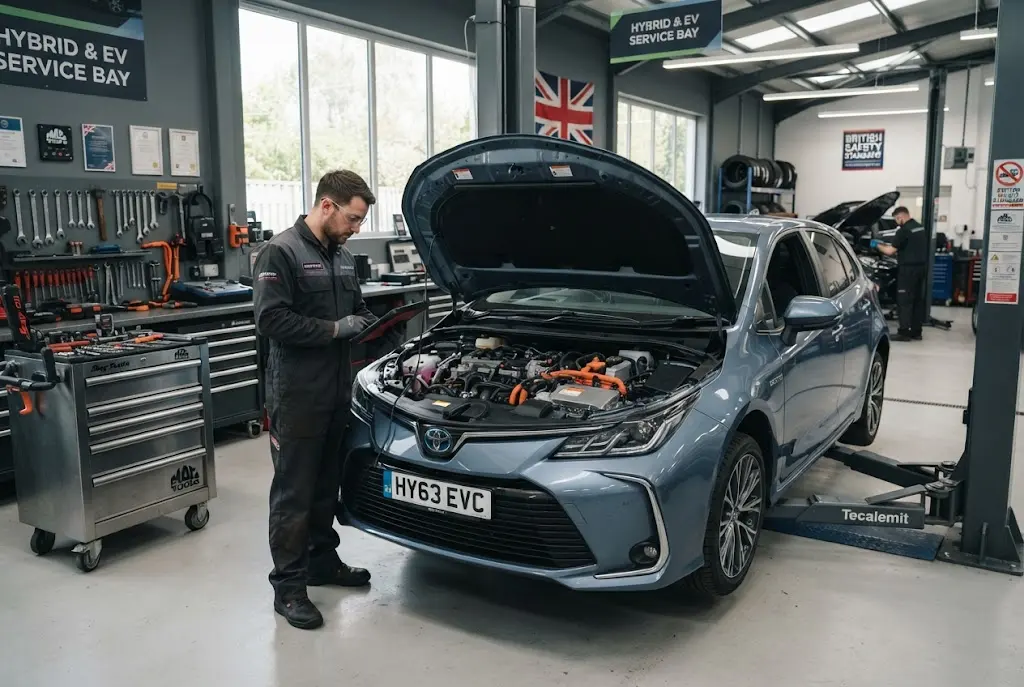
Hybrid servicing is the inspection and maintenance of a vehicle that uses both an internal combustion engine and an electric propulsion system. The precise work varies between models, but a service can include conventional mechanical checks alongside inspections of hybrid-specific components.
Traditional maintenance such as checking fluids, brakes, tyres, suspension and steering remains relevant. At the same time, technicians may need to assess the condition of the hybrid battery system, electrical components and related electronic controls.
Hybrid vehicles are not all designed in the same way. Some use a petrol engine and electric motor combination without external charging, while plug-in hybrids can also connect to charging infrastructure. This means owners should follow the manufacturer’s service schedule rather than assuming every hybrid requires the same maintenance routine.
Why Hybrid Servicing Matters
A hybrid powertrain is made up of multiple systems that must work together. The petrol or diesel engine, electric motor, battery, transmission and control electronics all contribute to vehicle operation.
Regular maintenance can help identify issues before they develop into more serious problems. It also gives technicians an opportunity to check components that may not be obvious during normal driving.
Manufacturers can specify different inspection intervals and procedures. For example, Toyota UK recommends servicing its hybrid vehicles every 12 months or 10,000 miles, whichever comes first, although some models have different intervals. Toyota also says its Hybrid Service includes checks of the hybrid system and battery. Toyota’s UK hybrid information provides manufacturer-specific guidance for its vehicles.
What Does Hybrid Servicing Include?
The contents of a hybrid service depend on the vehicle and the service level selected. However, several areas are commonly important.
Engine and Fluids
Hybrid vehicles that use an internal combustion engine still require conventional engine maintenance. Engine oil, coolant, filters and other fluids may need inspection or replacement according to the manufacturer’s schedule.
Even though the engine may switch off frequently during driving, it still operates under demanding conditions. Appropriate servicing therefore remains essential for the combustion side of the powertrain.
Braking System
Hybrid vehicles often use regenerative braking to recover energy during deceleration. This can reduce reliance on the conventional friction braking system under certain driving conditions.
That does not mean brakes can be ignored. Brake discs, pads, callipers and associated components still require inspection. In some circumstances, reduced use of friction brakes can also influence how components wear or deteriorate.
Hybrid Battery System
The battery is one of the most distinctive components of a hybrid vehicle. Depending on the design, it stores electrical energy that can be used to assist propulsion or operate the vehicle’s electric systems.
Battery technology varies considerably between manufacturers and generations of vehicles. Consequently, technicians should use vehicle-specific procedures rather than applying assumptions from another hybrid model.
Cooling and Electrical Systems
Hybrid systems generate heat and rely on appropriate thermal management. Depending on the vehicle, dedicated cooling arrangements may support the battery, inverter or other components.
Technicians may also inspect electrical connections, warning systems and diagnostic information. Any unusual warning light, change in performance or electrical fault should be investigated rather than ignored.
Toyota Hybrid Service as an Example
Toyota is one of the best-known hybrid manufacturers in the UK, making its servicing approach a useful example of how manufacturer-specific hybrid maintenance can work.
Toyota UK states that its Hybrid Service checks the vehicle’s hybrid system and battery. The manufacturer also says that completing the relevant service annually can make an eligible vehicle qualify for an additional year or 10,000 miles of Hybrid Battery Extended Cover, subject to its terms and conditions.
Toyota also recommends servicing many of its hybrid vehicles every 12 months or 10,000 miles, whichever comes first. However, owners should always check the service requirements for their specific vehicle rather than applying a general interval to every Toyota hybrid.
This illustrates an important point about hybrid servicing: manufacturer guidance should remain the starting point when determining what maintenance a particular vehicle needs.
Do Hybrid Cars Need More Maintenance?
It is tempting to assume that adding electric technology automatically makes a hybrid more expensive or complicated to maintain. In practice, the answer depends on the vehicle and the type of work required.
Some hybrid components can reduce wear on conventional mechanical systems. Regenerative braking, for example, can reduce the amount of work performed by friction brakes during some driving conditions.
At the same time, hybrid vehicles contain additional electrical components that conventional petrol cars do not have. Battery systems, power electronics, electric motors and high-voltage wiring require appropriate knowledge and safety procedures.
The overall maintenance experience therefore depends on the vehicle’s design, age, condition and service history. Owners should consider the complete vehicle rather than focusing on one component when assessing maintenance needs.
Why Hybrid Technicians Need Specialist Training
One of the biggest changes created by hybrid vehicles is the need for specialist technician knowledge. High-voltage systems can present significant safety risks if they are handled incorrectly.
The Institute of the Motor Industry provides dedicated electric and hybrid vehicle qualifications covering different levels of work. Its Level 2 technical specialist qualification, for example, focuses on safely preparing electric and hybrid vehicles for routine maintenance and repair. The qualification covers recognising high-voltage hazards and isolating and reinstating high-voltage systems, but does not qualify a technician to carry out direct high-voltage system work.
More advanced training is available for technicians who need to diagnose, test and repair high-voltage components. IMI’s Level 4 qualification covers advanced diagnosis, testing and repair of electric and hybrid vehicle systems and components.
This distinction is important because not every technician who can service a conventional car should automatically work on a hybrid’s high-voltage system. Appropriate training, equipment and working procedures matter.
Hybrid Services and Workshop Safety
Workshop safety is a central part of maintaining hybrid vehicles. Technicians need to understand how the vehicle’s high-voltage system operates and how it should be made safe before relevant work begins.
IMI training materials distinguish between routine maintenance around high-voltage systems and direct work on those systems. This means workshops need to understand the limits of their technicians’ qualifications and ensure that appropriate personnel handle specialist work.
For motorists, this creates a useful question when choosing a garage: does the workshop have technicians trained to work safely with the particular hybrid system fitted to the vehicle?
A reputable workshop should be able to explain its experience with hybrid vehicles and identify whether specialist work needs to be referred to a suitably qualified technician.
Hybrid Maintenance Beyond the Battery
The battery often receives the most attention when people discuss hybrid vehicles, but good maintenance involves the entire vehicle.
Tyres, suspension, steering and wheel alignment remain important because hybrid vehicles still depend on mechanical systems for safe handling. If a vehicle develops uneven tyre wear or changes in steering behaviour, an inspection may be appropriate.
Drivers can learn more about this aspect of maintenance in our guide to wheel alignment, which explains how steering geometry and alignment equipment can affect tyre wear and vehicle handling.
Likewise, hybrid owners should not overlook routine servicing simply because the vehicle can operate electrically for part of a journey. Engine components, cooling systems, brakes, suspension and tyres still require attention.
Hybrid Servicing and Diagnostic Technology
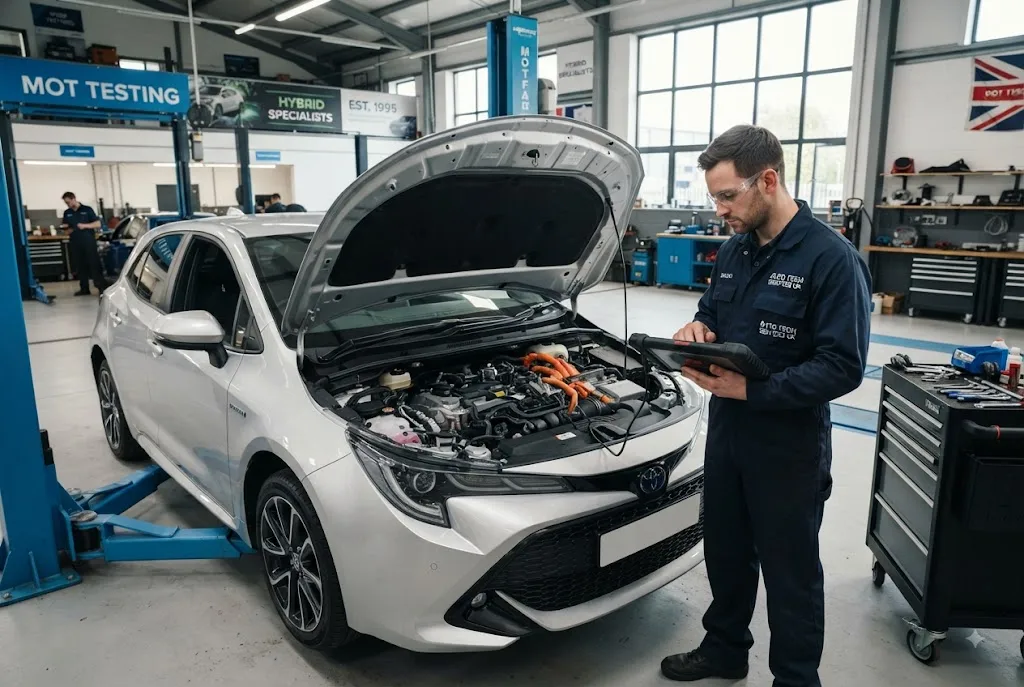
Modern hybrids rely heavily on electronic control systems. A workshop may therefore need advanced diagnostic equipment to investigate warning lights, performance problems or communication faults.
Diagnostics can help technicians identify information stored by the vehicle’s control modules. However, diagnostic equipment is only one part of the process. Technicians also need to interpret the information correctly and follow appropriate manufacturer procedures.
This is particularly relevant when a fault involves the interaction between mechanical and electrical systems. A warning message may not immediately reveal the underlying cause, making technical knowledge and structured diagnosis important.
How Hybrid Servicing Is Changing the UK Aftermarket
The expansion of hybrid vehicles is contributing to a wider transition across the automotive service industry. Garages that historically focused on petrol and diesel vehicles increasingly need to develop skills for electrified powertrains.
This transition affects several areas of workshop operations, including technician training, personal protective equipment, diagnostic tools, isolation procedures and investment in specialist equipment.
It also changes customer expectations. Drivers may increasingly search for workshops specifically advertising hybrid services rather than assuming that every garage can work on every type of electrified vehicle.
Large garage networks have the scale to invest in training and equipment across multiple locations. Independent garages can also compete by developing specialist expertise and building a strong reputation for hybrid maintenance.
Hybrid Servicing and the Industry Transition to EVs
Hybrid vehicles sit within a broader transition towards vehicle electrification. For many workshops, developing hybrid expertise can provide a bridge towards servicing fully electric vehicles.
However, hybrid and electric vehicles are not identical. A hybrid retains a combustion engine and associated systems, while a battery electric vehicle relies entirely on electric propulsion. The technical requirements therefore overlap in some areas but differ in others.
The development of EV servicing will become increasingly relevant as the UK vehicle parc changes. Workshops that invest in high-voltage training may be better positioned to support both hybrid and electric customers, although the appropriate qualification and equipment will depend on the work being performed.
How Often Should a Hybrid Be Serviced?
There is no single service interval that applies to every hybrid vehicle. Owners should follow the maintenance schedule supplied by the manufacturer for their specific model.
Service intervals can be based on time, mileage or both. Driving conditions may also influence maintenance requirements, particularly where vehicles experience frequent short journeys, heavy traffic or demanding operating conditions.
For example, Toyota UK states that many Toyota hybrids should be serviced every 12 months or 10,000 miles, whichever occurs first, while noting that some vehicles have different intervals.
The safest approach is therefore to check the owner’s handbook, manufacturer’s service information or an approved servicing system rather than relying on a generic online interval.
Choosing a Garage for Hybrid Services
Choosing the right workshop can make hybrid maintenance easier and safer. Motorists should consider several factors before booking a vehicle.
- Check whether the garage regularly works on hybrid vehicles.
- Ask whether technicians have appropriate hybrid or high-voltage training.
- Confirm that the workshop has suitable diagnostic equipment.
- Ask what is included in the proposed service.
- Check whether manufacturer-specific service requirements will be followed.
- Request clarification if a warning light or hybrid-system fault has appeared.
- Keep records of servicing and repairs for future maintenance and resale purposes.
For newer vehicles, owners may also want to consider whether servicing at an authorised manufacturer network provides benefits related to warranty or service-activated cover. These arrangements differ between manufacturers, so the relevant terms should always be checked.
Signs Your Hybrid May Need Attention
Regular servicing should not replace common-sense attention to changes in vehicle behaviour. Drivers should arrange an inspection if they notice unusual warning lights, reduced performance, abnormal noises, braking changes or other unexpected symptoms.
Hybrid-specific warning messages should be taken seriously because they can relate to electrical or control systems that require specialist diagnosis.
Likewise, unusual battery behaviour or changes in the way the vehicle switches between electric and engine operation may justify professional assessment. A qualified technician can determine whether the behaviour is normal for that particular model or indicates a fault.
The Future of Hybrid Servicing in Britain
The hybrid aftermarket is likely to remain an important part of Britain’s automotive service sector as electrified vehicles continue to make up a significant part of the vehicle landscape.
Workshops will need to balance traditional mechanical expertise with electrical and electronic skills. Training will remain particularly important because hybrid technology continues to develop and manufacturers use different powertrain architectures.
Investment in diagnostic equipment, safety equipment and technician development can therefore become a competitive advantage for automotive service businesses. Large networks may benefit from economies of scale, while independent workshops can differentiate themselves through specialist knowledge and local reputation.
For customers, this evolution should create a wider choice of capable hybrid service providers. However, the most important consideration will remain whether the individual workshop has the right skills and equipment for the vehicle and the work required.
Final Thoughts on Hybrid Servicing
Hybrid servicing is more than a conventional car service with an additional battery inspection. It involves understanding how mechanical, electrical and electronic systems interact and ensuring that appropriate procedures are followed when working around high-voltage components.
Routine maintenance remains important across the whole vehicle, including the engine, brakes, tyres, suspension, fluids and cooling systems. At the same time, hybrid batteries, electrical systems and diagnostic information require specialist attention when necessary.
As Britain’s automotive aftermarket continues its transition towards electrified vehicles, workshops with suitable training and equipment will be increasingly valuable. For hybrid owners, choosing a garage with relevant experience and following the manufacturer’s service schedule can help support safe, reliable and well-maintained motoring.