
Understanding the difference between an MOT and service is important for anyone responsible for maintaining a vehicle in the UK. An MOT checks whether a vehicle meets specific legal safety and environmental standards at the time of its test, while servicing is a broader maintenance process designed to keep the vehicle operating reliably. They serve different purposes, but together they form an important part of responsible vehicle ownership.
For motorists, understanding these distinctions can make it easier to plan maintenance, identify legal requirements and respond appropriately when a vehicle develops faults. For garages and workshops, changing vehicle technology and regulatory expectations also make consistent inspection procedures and compliance increasingly important.
MOT and Service: What Is the Difference?
An MOT is a legally required test for most vehicles once they reach the applicable testing age. The test examines specified components and systems against the standards established for the MOT scheme. If the vehicle meets the relevant requirements, it receives an MOT pass. If it does not, defects are recorded according to their classification.
A service is different. It is scheduled maintenance carried out according to the vehicle manufacturer’s recommendations or an appropriate maintenance plan. Depending on the vehicle and service level, this can involve replacing fluids and filters, checking brakes, examining tyres and inspecting other components.
Passing an MOT does not mean that a vehicle has received a full service. Likewise, having a vehicle serviced does not replace the legal requirement for an MOT where one is required.
Why MOT Testing Matters for UK Drivers
The MOT scheme provides a standardised way of assessing whether vehicles meet prescribed requirements relating to road safety and environmental performance. The Driver and Vehicle Standards Agency, commonly known as the DVSA, oversees the MOT scheme in Great Britain.
The official GOV.UK MOT guidance explains the legal framework around MOT testing, including requirements for vehicles and information about the test process.
Drivers should check their vehicle’s MOT status rather than assuming that a previous pass remains valid indefinitely. The MOT certificate records the result of a particular test, while the vehicle can develop faults or wear afterwards.
Understanding DVSA Regulations
DVSA regulations and MOT standards provide the framework within which authorised testing stations operate. MOT testers are required to follow prescribed procedures when examining vehicles, recording defects and determining test outcomes.
The testing system is designed to provide consistency across participating garages. Testers use defined inspection standards rather than making a general judgement about whether a vehicle feels suitable for everyday driving.
This distinction matters because an MOT is not a comprehensive mechanical health check. A component can remain within the MOT requirements while still showing wear that should be addressed during routine servicing.
What Does an MOT Test Check?
The precise inspection depends on the vehicle type, but MOT testing covers a range of safety and environmental areas. These can include lighting, steering, suspension, brakes, tyres, body condition, emissions and other specified components.
Testing procedures are based on established inspection standards. Where defects are identified, they are recorded using the classifications applicable to the MOT scheme. The outcome can therefore depend on the nature and severity of individual defects.
Motorists should remember that the test is based on the condition of the vehicle when it is presented for inspection. A successful test should not be interpreted as a guarantee that no maintenance will be required during the following months.
How Servicing Supports Vehicle Maintenance
Servicing complements MOT testing by focusing on ongoing maintenance rather than simply meeting the requirements of a statutory test. The exact service schedule varies between vehicles, which is why owners should consult the manufacturer’s recommendations and the vehicle’s maintenance history.
Routine servicing can include checks that go beyond the MOT inspection. Depending on the vehicle, technicians may inspect fluids, filters, belts, battery condition, engine components, transmission systems and other maintenance items.
This makes servicing particularly useful for identifying developing issues that may not yet represent an MOT failure. A workshop can also advise the owner when maintenance is approaching its recommended interval.
Workshop Compliance and Inspection Standards
Workshops involved in MOT testing have responsibilities that extend beyond simply carrying out physical inspections. They must operate within the requirements of the MOT scheme and use appropriate equipment, procedures and record-keeping processes.
Consistency is important because motorists expect the same established standards to be applied when their vehicles are tested. Authorised testing facilities and testers are subject to requirements designed to support the integrity of the testing system.
For customers, choosing an appropriate garage means checking whether the business provides MOT testing, servicing or both. These services can sometimes be available at the same workshop, but they remain separate activities with different purposes.
Legal Requirements for Vehicle Owners
One of the most important differences between an MOT and routine servicing is the legal status of each. Where an MOT is required for a vehicle, driving without a valid MOT can create legal problems and may affect the owner’s ability to use the vehicle lawfully.
Servicing, by contrast, is generally a maintenance matter rather than a standalone statutory testing requirement. However, failing to maintain a vehicle can have practical consequences if mechanical problems develop or safety-related components deteriorate.
Drivers should therefore keep track of both their MOT expiry date and their recommended service intervals. Treating these as separate calendar events can help prevent one from being overlooked.
Regulatory Reform and Policy Changes
Vehicle technology continues to develop, and regulatory systems have to adapt to changes in vehicle design, emissions technology and safety systems. Modern cars contain substantially more electronic equipment than many older vehicles, which can influence how faults are diagnosed and maintained.
Regulatory reform can also affect inspection procedures and workshop requirements. For motorists, the practical approach is to rely on current official guidance when checking legal requirements rather than assuming that an older MOT process or maintenance routine remains unchanged.
Workshops likewise need to keep their procedures aligned with applicable requirements. Training, equipment and accurate record keeping are increasingly important as the vehicle parc becomes more technologically diverse.
Should You Book an MOT and Service Together?
Booking an MOT and service together can be convenient because both tasks can be handled during the same workshop visit. It can also give the owner a clearer picture of the vehicle’s current condition.
However, combining the appointments does not mean that one service replaces the other. The MOT remains a formal inspection against defined requirements, while servicing covers broader maintenance activities.
If an MOT identifies a defect, the garage may recommend repair work. If the vehicle is also being serviced, technicians may identify additional maintenance items that are not directly related to the MOT result. Ask for a clear explanation of which work is legally necessary, which is recommended maintenance and which can reasonably be scheduled for later.
Preparing Your Vehicle Before an MOT
Drivers can reduce avoidable problems by carrying out basic checks before presenting a vehicle for testing. Checking lights, tyres, windscreen condition, washer fluid and other easily visible items can help identify obvious issues.
It is also useful to make sure that the vehicle has been maintained according to its normal service schedule. However, owners should not attempt to make complex repairs without appropriate knowledge or equipment simply to prepare for an MOT.
Keeping service records is equally valuable. A consistent maintenance history helps owners understand previous work and can provide useful information to technicians when investigating recurring problems.
What to Do After an MOT
After the test, the result should be reviewed carefully. If the vehicle passes, owners should still continue with normal servicing and maintenance. If defects are recorded, the appropriate response depends on their classification and the condition of the vehicle.
Where repairs are recommended, ask the workshop to explain the problem, the proposed repair and whether the issue is connected to the MOT result or routine maintenance. Clear communication can make it easier to prioritise expenditure.
For drivers considering wider maintenance planning, understanding car service cost in the UK can help when budgeting for scheduled servicing, labour and potential repairs.
MOT and Service as Part of Long-Term Vehicle Care
MOT testing and servicing work best when treated as complementary parts of vehicle ownership. The MOT provides a defined assessment against applicable testing standards, while servicing provides ongoing maintenance aimed at keeping the vehicle in good operating condition.
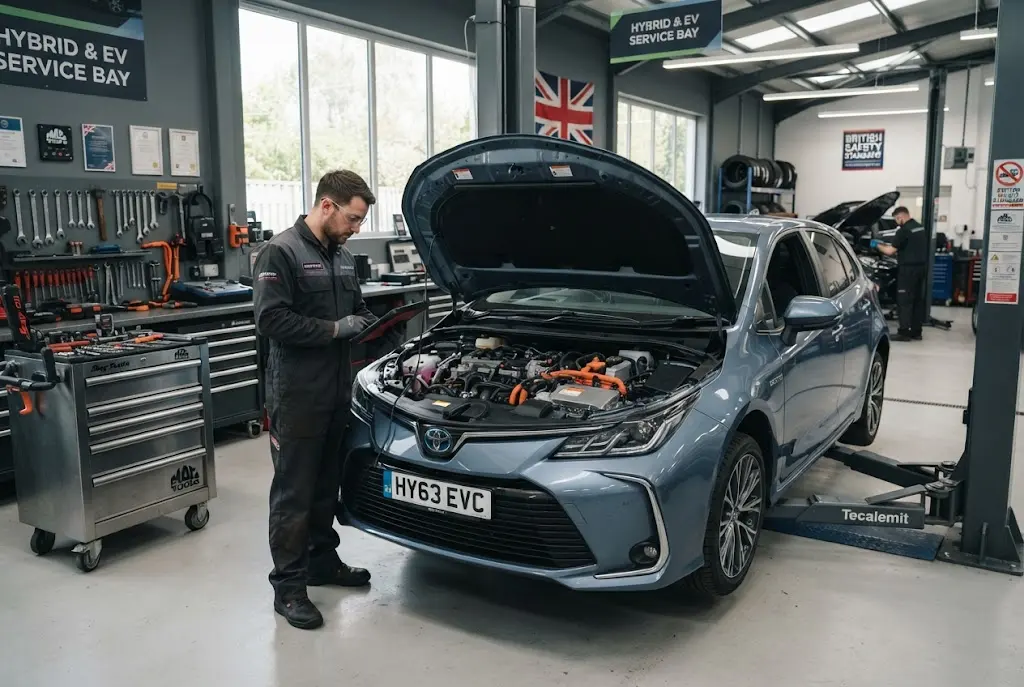
As the UK vehicle market changes, workshops are also adapting to increasingly sophisticated vehicles. This includes greater demand for diagnostic expertise and specialist maintenance for newer powertrains. Drivers interested in this transition can also explore hybrid services in the UK and developments in auto inspection services.
Keeping MOT dates, service intervals and repair records organised gives motorists a practical framework for managing vehicle maintenance. Most importantly, owners should distinguish between statutory testing requirements and routine servicing so that both areas receive appropriate attention.