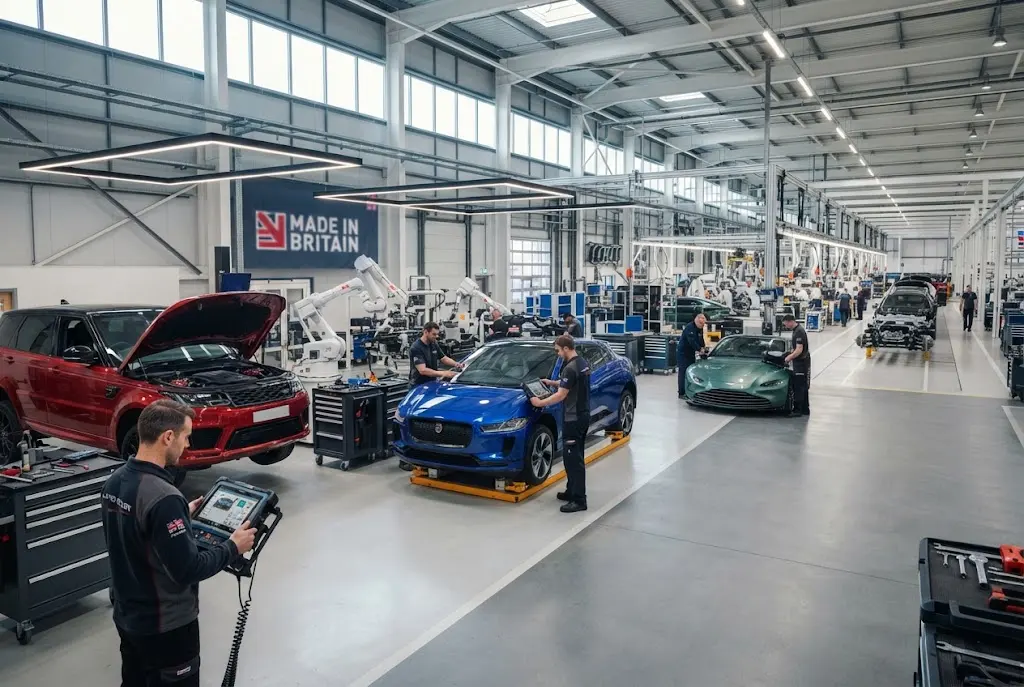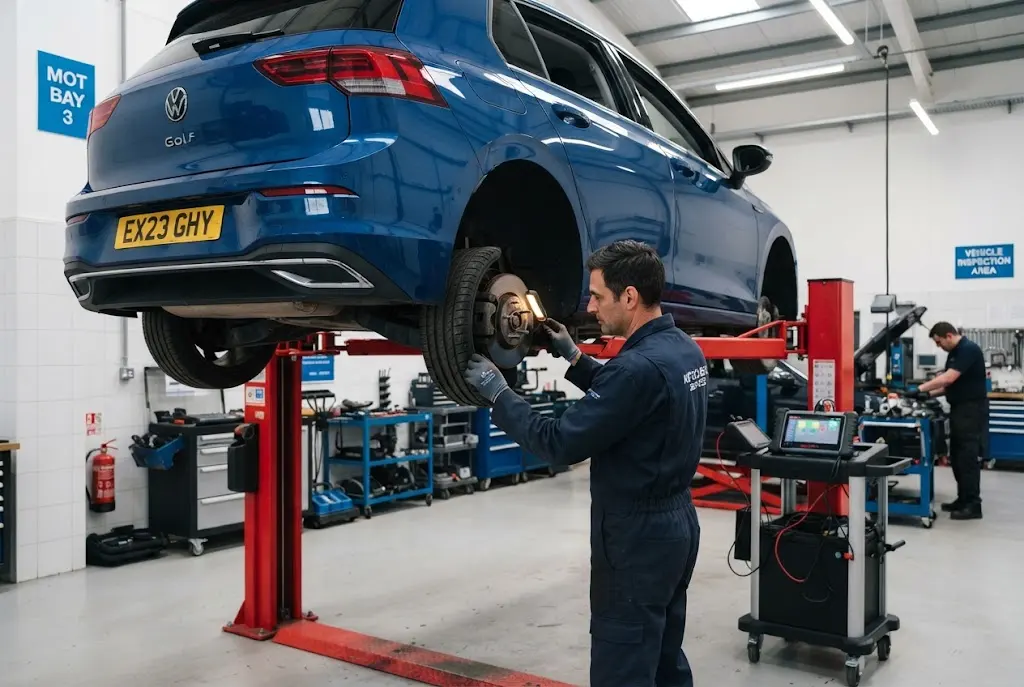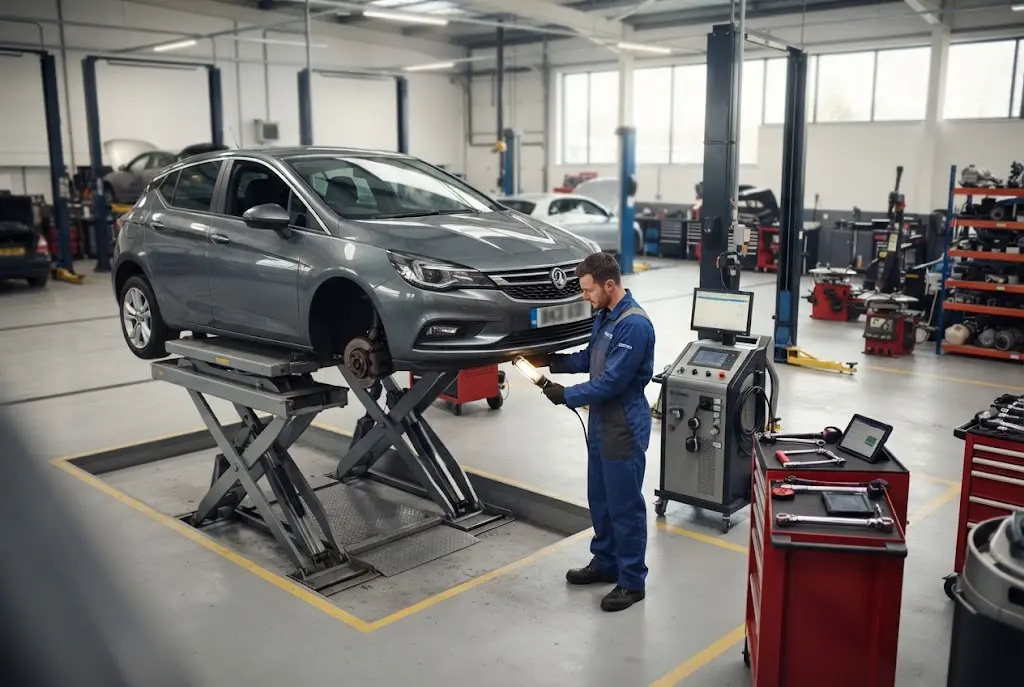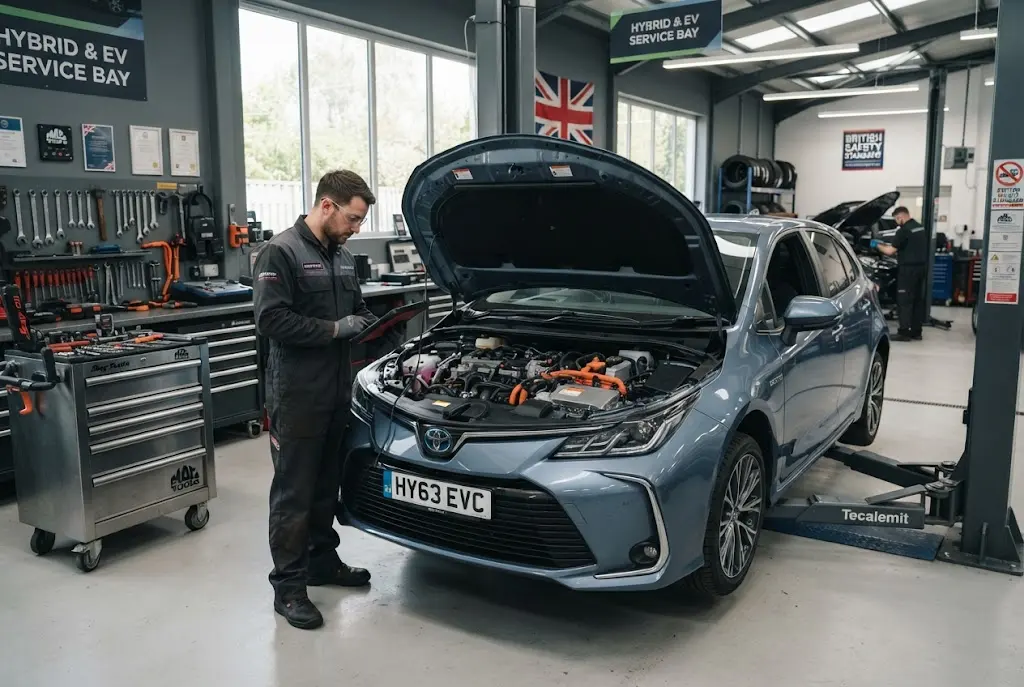

Hybrid services are becoming an increasingly important part of the UK’s changing automotive service market. Hybrid vehicles combine an internal combustion engine with electric propulsion technology, creating maintenance requirements that can differ from those of conventional petrol and diesel cars. At the same time, the wider growth of electric vehicles is changing the skills, equipment and infrastructure required by automotive workshops.
For motorists, this transition means choosing a workshop with the right knowledge and equipment for their particular vehicle. For garages, it means preparing technicians, diagnostic systems and working practices for a market that includes conventional hybrids, plug-in hybrids and fully electric vehicles. The change is already visible in the UK’s charging infrastructure, with official Department for Transport statistics recording 121,171 public EV chargers across the UK as of 1 July 2026. Why Hybrid Services Matter in the UK
Hybrid vehicles sit between traditional combustion-powered cars and fully electric vehicles. They can use an engine alongside an electric motor and battery system, meaning technicians may need knowledge of both conventional automotive components and high-voltage electrical systems.
This makes hybrid servicing different from simply applying a standard petrol or diesel maintenance routine. A workshop may need suitable diagnostic equipment, appropriate safety procedures and technicians who understand the vehicle’s electrical architecture.
The wider shift towards electrified transport also means that hybrid expertise can provide workshops with experience that is relevant to the industry’s longer-term transition. However, hybrid and battery-electric vehicles should not be treated as mechanically identical. Their systems and servicing requirements can vary substantially between models.
What Do Hybrid Services Include?
The exact scope of hybrid services depends on the vehicle manufacturer, model, mileage and maintenance schedule. Routine work can still involve familiar components such as tyres, brakes, suspension and other conventional vehicle systems.
At the same time, technicians may need to assess hybrid-specific components, electronic control systems and battery-related systems. Diagnostic equipment can be particularly important when warning lights or unusual vehicle behaviour indicate an electronic or powertrain issue.
Servicing should follow the manufacturer’s recommended procedures. A workshop should also be able to explain which maintenance tasks are included in a service and which additional inspections may be recommended.
Hybrid Mechanics and Specialist Skills
The growth of electrified vehicles is changing the skills required across the automotive workforce. A technician working on a hybrid vehicle may need an understanding of high-voltage systems alongside traditional mechanical skills.
Training is particularly important because hybrid and electric systems can contain high-voltage components that require appropriate safety procedures. Workshops need suitable equipment, processes and staff training before undertaking work on systems that present electrical hazards.
For customers, this makes technician competence an important consideration when choosing hybrid services. A garage that works on conventional vehicles may not automatically have the equipment or training required for every hybrid or EV system.
EV Servicing and the Move Beyond Hybrid Vehicles
Hybrid servicing is part of a broader transition in the UK automotive market. Battery-electric vehicles have different maintenance requirements because they do not use a conventional internal combustion engine. However, they still require attention to tyres, brakes, suspension, cooling systems and other vehicle components.
Specialist EV servicing in the UK is therefore becoming an increasingly relevant area for workshops preparing for changes in the vehicle parc.
The transition does not mean conventional servicing disappears immediately. UK roads continue to contain large numbers of petrol, diesel and hybrid vehicles, so automotive businesses need capabilities that can serve multiple powertrain types.
Battery Servicing and Diagnostics
Battery technology is one of the most important differences between conventional vehicles and electrified powertrains. Hybrid and electric vehicles use batteries as part of their propulsion systems, but the design, capacity and operating characteristics can vary significantly.
Battery-related diagnosis should therefore be approached according to the manufacturer’s specifications and appropriate technical procedures. A battery warning does not necessarily mean that an entire battery pack needs replacing. Technicians may need to investigate related electrical, thermal or control-system issues before determining the appropriate repair.
Specialist diagnostic equipment can help technicians identify faults and assess system performance. However, electronic diagnostic information should be interpreted alongside physical inspection and manufacturer procedures rather than treated as a complete diagnosis on its own.
Charging Infrastructure and Hybrid Services
Charging infrastructure is particularly relevant to plug-in hybrids and fully electric vehicles. The UK’s public charging network has expanded considerably, although availability varies between regions and charging locations.
According to Department for Transport statistics, the UK had 121,171 public EV chargers on 1 July 2026, including 28,887 chargers rated rapid or above at 50kW or more. The figures also show regional variation in charger provision.
The same official release records different types of charging locations, with destination chargers accounting for 52% of the UK’s public EV chargers, on-street chargers 33%, en-route chargers 11% and other locations 4% as of 1 July 2026.
This expanding infrastructure creates additional considerations for vehicle owners and automotive businesses. Workshops increasingly need to understand charging systems, charging-related faults and the relationship between vehicle electronics and charging equipment.
Preparing Workshops for Electric Vehicles
Preparing for EVs involves more than purchasing a diagnostic tool. Workshops may need to review technician training, high-voltage safety procedures, personal protective equipment, workshop layouts and equipment requirements.
Businesses also need to decide which types of electrified vehicles they are equipped to service. A workshop may choose to specialise in particular manufacturers or powertrains, while another may develop broader capabilities across hybrid and battery-electric vehicles.
Clear service processes are equally important. Customers should understand what the workshop can inspect, what equipment is available and whether specialist work needs to be referred elsewhere.
The Changing EV Workforce
The automotive workforce will need to adapt as the proportion of electrified vehicles increases. Traditional mechanical knowledge remains valuable, but technicians are increasingly expected to understand electrical systems, computerised diagnostics and vehicle software.
This creates an ongoing requirement for technical education and workplace training. Workshops that invest in staff development can build capabilities that are relevant across several generations of vehicle technology.
The transition also changes the role of diagnostic work. Technicians may increasingly spend time interpreting electronic data and communicating technical findings rather than relying solely on traditional mechanical troubleshooting.
Green Mobility and the Automotive Aftermarket
The growth of hybrid and electric vehicles forms part of the wider move towards lower-emission transport. However, the automotive aftermarket still has to support vehicles with very different powertrains for many years.
This creates a mixed-market environment. A single workshop may service a diesel family car in the morning, a hybrid vehicle later in the day and an EV requiring specialist diagnostics the following morning.
For that reason, the industry’s transition is not simply a replacement of one technology with another. It involves developing a broader service capability while maintaining appropriate expertise for existing vehicles.
How Charging Growth Affects Vehicle Ownership
The development of charging infrastructure can influence the practical experience of owning a plug-in hybrid or electric vehicle. Public charger availability differs between locations, so drivers may need to consider their normal routes, home charging options and access to workplace or destination charging.
Official data shows that charger provision varies significantly between UK regions. As of 1 July 2026, Scotland had 231.6 public chargers per 100,000 residents, compared with 112.1 in the North West and 60.0 in Northern Ireland.
These figures demonstrate why national infrastructure statistics should not be interpreted as representing every local area. A driver’s actual charging experience depends heavily on where they live, work and travel.
Choosing Hybrid Services for Your Vehicle
When choosing a workshop, owners should check whether it has experience with their specific hybrid or electric powertrain. It is useful to ask whether technicians have relevant training and whether the workshop has suitable diagnostic and safety equipment.
Owners should also provide the vehicle’s service history where possible. This can help technicians understand previous maintenance and identify whether a reported issue is new or recurring.
Routine servicing remains important even when a vehicle uses electric propulsion. Drivers should follow the manufacturer’s maintenance schedule and address warning lights or unusual behaviour promptly rather than assuming that an electrified vehicle requires little maintenance.
Hybrid Services and the Future of UK Automotive Maintenance
Hybrid services are becoming part of a broader transformation in the UK automotive aftermarket. Workshops are adapting to vehicles that combine mechanical systems with increasingly sophisticated electrical and electronic technology.
The growth of public charging infrastructure provides one indication of this transition. With more than 121,000 public EV chargers recorded in the UK by July 2026, charging and electrification are becoming increasingly established parts of the automotive environment.
For workshops, the priority is developing appropriate technical skills, safety procedures, equipment and diagnostic capability. For motorists, the priority is finding service providers that understand the particular technology used by their vehicle.
Hybrid vehicles will continue to coexist with petrol, diesel and battery-electric cars across the UK market. Understanding how auto inspection services, routine maintenance and specialist electrified-vehicle work fit together can help drivers make better-informed maintenance decisions as the industry continues to evolve.