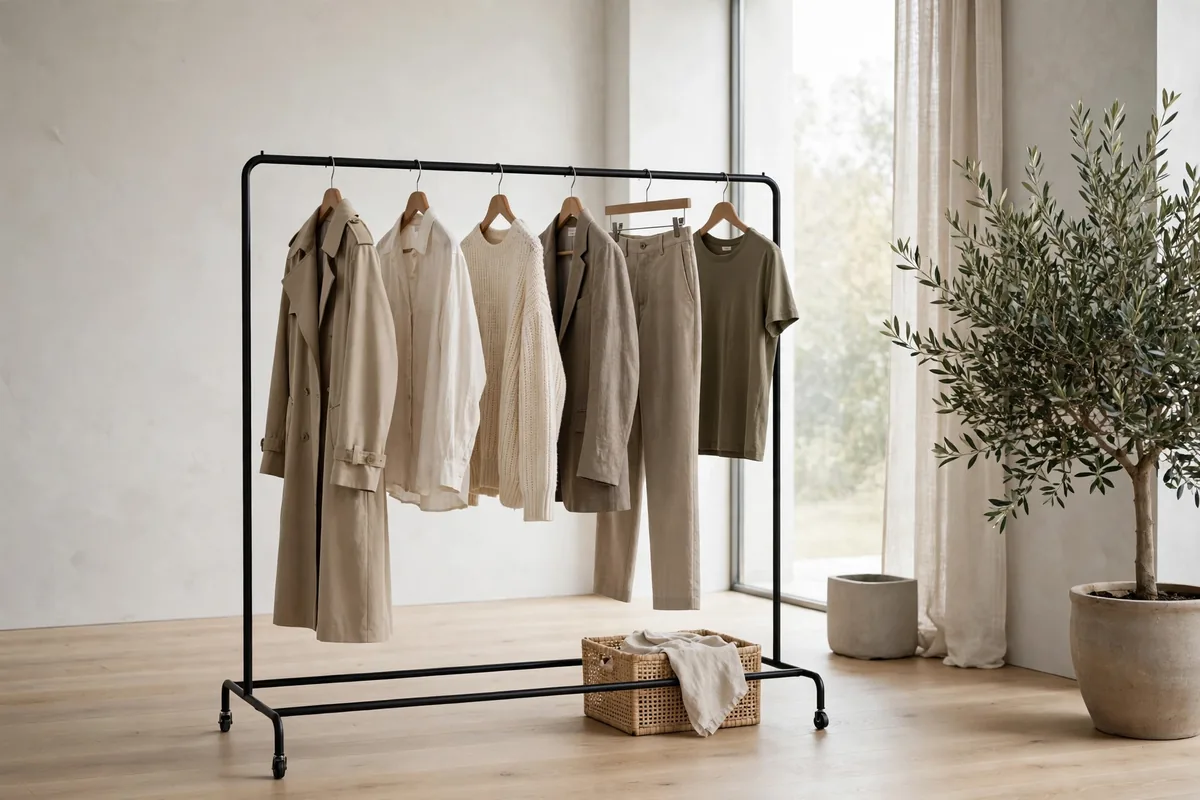

A capsule wardrobe is a simple idea with an outsized effect: a small set of clothes, chosen deliberately, in which almost everything works with almost everything else. Instead of a wardrobe full of single-purpose outfits and nothing to wear, you end up with fewer pieces, better quality, and mornings that start without a negotiation. Building one is less about buying a new wardrobe than about editing the one you already own.
The idea suits British weather particularly well. A climate that can ask for a coat and sunglasses in the same week rewards versatile layers far more than it rewards a large collection of occasion-specific clothes. This guide explains how a capsule wardrobe works, how to build one from what you have, and how to keep it working through all four seasons without it becoming a uniform you resent.
What a capsule wardrobe actually is
The principle is coordination. Every item earns its place by pairing with several others, fitting properly, and suiting the life you actually lead — your work, your weekends, your climate — rather than the life in a magazine. Most people land somewhere between thirty and fifty pieces for a season, including shoes and outerwear, but the number matters far less than the discipline: if it does not combine, flatter or get worn, it does not stay.
A capsule is not a ban on colour or personality. It works best when it is built around a base of neutrals you genuinely like, with a smaller set of accent pieces that carry the character. Think of it the way a good morning routine works — the same logic our beginner’s skincare routine guide describes: a few well-chosen essentials, used consistently, beat a shelf of products bought on impulse.
Start by editing, not shopping
Take everything out and be honest about it. Clothes fall into four groups: things you wear constantly, things you wear occasionally and value, things you keep for reasons of guilt or optimism, and things that no longer fit your body or your life. The first two groups are the raw material of your capsule. The third group is where most wardrobes go wrong — the sale bargain with the tags still on, the size you are keeping for a future self.
Try combinations before you decide anything is missing. A top that only works with one skirt is a liability; a top that works with trousers, jeans and a skirt is a foundation. Photograph the outfits that work, because on a tired weekday morning a picture is worth more than inspiration. Only when you can see the actual gaps — the layer that would unlock six outfits, the shoes that would finish them — do you have a shopping list, and it will be a short one.
Choose your colours and your core pieces
Pick two or three base colours that suit you and that your existing clothes already lean towards — navy, grey, black, camel and white are the usual foundations — then one or two accent colours for the pieces that sit near your face. When everything shares a palette, mixing stops requiring thought, and getting dressed becomes assembly rather than invention.
The core of a year-round capsule is predictable because British life is predictable: well-fitting trousers and jeans, a small rotation of tops and knitwear, one or two dresses or smarter outfits if your life calls for them, a proper waterproof coat, a warmer coat, and shoes that cover walking, working and going out. Quality matters more here than anywhere else in your wardrobe, for the same reason our guide to choosing the best beauty products gives: items you use every day repay being chosen carefully, while the rarely used piece can be the cheap one.
Making it work across the seasons
The year-round trick is layering rather than duplication. A capsule built on pieces that stack — a shirt under knitwear under a coat — flexes from October to April, and the same tops work alone in summer with the knitwear stored away. Store out-of-season items out of sight; a wardrobe that only shows what is currently wearable is calmer to use and easier to keep edited.
Rotate deliberately. At each season change, spend twenty minutes reviewing what you actually wore, what annoyed you, and what the coming months demand. This is also where a capsule pays off when you travel: a coordinated set of clothes packs into a small case without effort, which is half the battle our UK weekend breaks guide describes when it talks about travelling light and arriving uncreased.
Keeping it up without spending more
A capsule wardrobe should reduce what you spend, and it does — provided replacements are treated as maintenance rather than shopping trips. The discipline most people adopt is one in, one out: a new piece enters only when it replaces something worn out or genuinely fills a gap you have felt repeatedly. Keeping a simple monthly budget for it helps; the method in our guide to creating a budget that works is built for exactly this kind of small, recurring decision.
It also helps to shop the way our UK black hair shop guide recommends judging any specialist retailer: on range, honest advice and whether the shop helps you buy better rather than simply buy more. The wider context is there too — our overview of the UK beauty market shows how much of the industry is built on persuading people to own more than they use, which is exactly the pressure a capsule wardrobe is designed to resist. Expect the first version to be imperfect. You will discover that you reach for the same five combinations, that one celebrated piece goes unworn, and that your life needs more of one thing and less of another than you predicted. That is the process working, not failing. A capsule wardrobe is not a finished product but a habit: fewer, better, coordinated clothes, reviewed honestly a few times a year. The reward is a wardrobe that stops being a daily problem and starts being what it should have been all along — a solved one.