
Professional tyre services cover much more than simply replacing a worn tyre. For UK drivers, they can include tyre fitting, puncture repairs, wheel balancing, replacement advice and access to tyres through specialist retailers and distribution networks. Choosing the right service at the right time can help maintain safe handling, efficient braking and reliable road performance.
Tyres are one of the few parts of a vehicle that remain in direct contact with the road, so their condition deserves regular attention. UK drivers are also responsible for ensuring that their vehicles remain roadworthy. GOV.UK states that car tyres must have at least 1.6mm of tread across the central three-quarters of the tyre and around the entire circumference, alongside being free from certain cuts and defects.
What Do Tyre Services Include?
The term tyre services covers a broad range of work carried out by garages, mobile tyre specialists, tyre retailers and other automotive businesses. The exact service required depends on the vehicle, tyre condition, driving requirements and the nature of the problem.
Common services include:
- Tyre inspection and condition checks
- Tyre fitting and removal
- Tyre replacement
- Puncture and tyre repairs where appropriate
- Wheel and tyre balancing
- Tyre pressure checks
- Tyre sourcing and distribution
- Seasonal or specialist tyre advice
Some businesses concentrate on fitting and repairs, while others operate as full-service automotive centres. Understanding the difference can help drivers choose a provider that matches their needs rather than selecting a service based on price alone.
Tyre Fitting and Why Correct Installation Matters
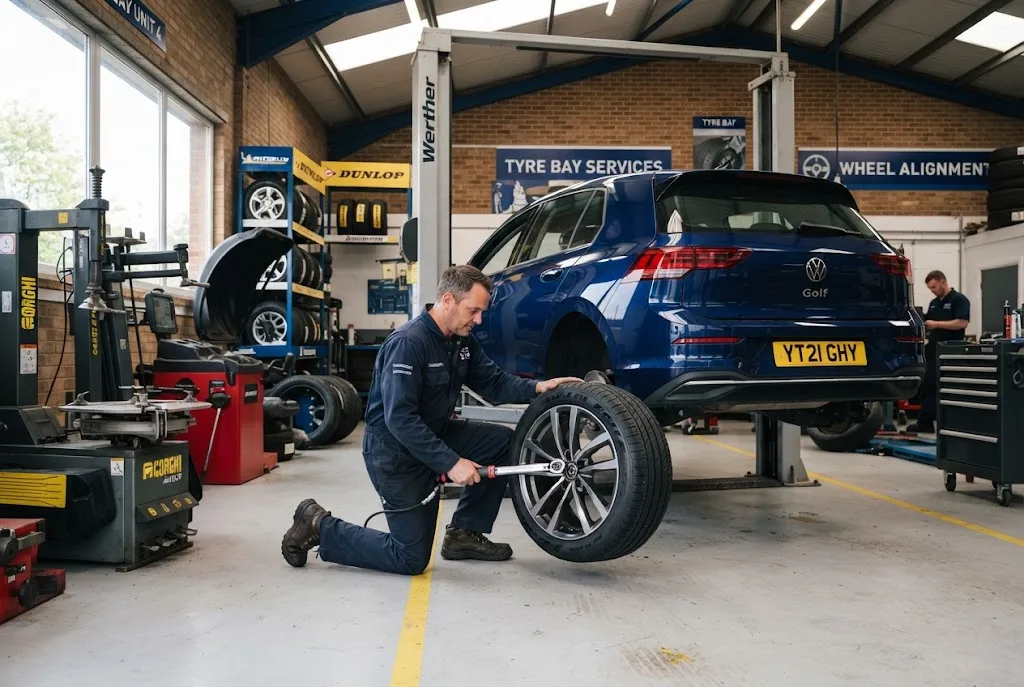
Tyre fitting involves removing an existing tyre and installing another onto the wheel. Although the process may appear straightforward, correct installation is important because an incorrectly fitted tyre can affect vehicle stability, handling and safety.
Professional fitting normally involves checking the tyre specification, mounting the tyre correctly, inflating it to the appropriate pressure and ensuring that the wheel is properly secured to the vehicle. Directional and asymmetric tyres also require particular attention to their sidewall markings and fitting orientation.
The GOV.UK MOT inspection guidance includes requirements relating to tyre size, type, condition and fitment. It also states that a tyre must not be fitted contrary to the manufacturer’s sidewall instructions. :contentReference[oaicite:0]{index=0}
For drivers buying tyres online, the fitting stage is therefore just as important as selecting the tyre itself. A suitable tyre still needs to be installed correctly before the vehicle returns to the road.
When Is Tyre Replacement Necessary?
Tyre replacement may be necessary when tread wear reaches the legal limit, when a tyre has suffered structural damage or when its condition makes continued use unsuitable.
Drivers should not rely solely on tread depth. Cuts, bulges, exposed cords, uneven wear and other visible defects can also indicate that a tyre needs professional assessment.
For ordinary cars and light vehicles, the UK legal minimum tread depth is 1.6mm across the central three-quarters of the tread and around the entire circumference. GOV.UK also advises drivers to check that tyres are correctly inflated and free from relevant cuts and defects. :contentReference[oaicite:1]{index=1}
However, waiting until a tyre reaches the legal minimum is not necessarily a sensible maintenance strategy. Regular inspections can identify abnormal wear or damage earlier and give drivers more opportunity to arrange replacement before a tyre becomes a serious roadworthiness concern.
Tyre Repairs: When Can a Tyre Be Fixed?
Tyre repairs can sometimes provide a practical solution to minor punctures or damage, but not every damaged tyre should be repaired. The decision depends on factors such as the location, depth and nature of the damage, as well as the tyre’s overall condition.
A professional tyre specialist should assess the tyre before deciding whether repair is appropriate. Continuing to drive on a damaged tyre without an inspection can create unnecessary safety risks.
Damage involving exposed cords, significant structural deterioration, bulges or other serious defects may mean that replacement is the safer option. The current GOV.UK MOT inspection guidance treats several serious tyre defects as dangerous or major defects, reinforcing the importance of proper assessment rather than assuming every puncture can be repaired. :contentReference[oaicite:2]{index=2}
Drivers who experience a puncture should therefore avoid treating a repair as an automatic alternative to replacement. A professional assessment should determine the appropriate course of action.
Tyre Balancing and Vehicle Performance
Tyre balancing helps ensure that the wheel and tyre assembly rotates evenly. When a wheel is out of balance, drivers may experience vibration through the steering wheel or vehicle, particularly at certain speeds.
Balancing is commonly considered when fitting new tyres, although it can also be relevant when vibrations develop during normal driving. A technician can check the wheel assembly and use balancing equipment to correct uneven weight distribution.
Properly balanced wheels can contribute to smoother driving and may help prevent uneven tyre wear. If a vehicle develops persistent vibration after a tyre change, it is worth returning to a qualified tyre or automotive specialist for assessment rather than ignoring the issue.
How Tyre Retailers Fit Into the UK Market
Tyre retailers play an important role in connecting drivers with the products and services they need. Depending on the business model, a retailer may sell tyres directly to consumers, provide fitting services, operate online, maintain physical branches or combine several of these channels.
Traditional retailers can provide face-to-face advice and immediate fitting, while online retailers have expanded the range of tyres that consumers can compare before making a purchase. Some businesses combine online ordering with local fitting appointments, creating a hybrid model between digital retail and traditional workshop services.
When comparing tyre retailers, drivers should look beyond the headline tyre price. Fitting, balancing, valve replacement, disposal charges and other service costs can affect the final amount paid.
Understanding Tyre Distribution in the UK
Tyre distribution is the supply-chain side of the market. Distributors help move tyres from manufacturers and suppliers through wholesalers, retailers and service businesses before they reach the vehicle owner.
An efficient distribution network matters because tyre demand can vary by size, vehicle type, brand, specification and season. Retailers need access to suitable stock, while consumers generally expect common tyre sizes to be available without unnecessary delays.
The growth of online automotive retail has also changed how consumers interact with the distribution process. A customer may now search for a particular tyre specification online, compare several options and arrange fitting separately. This makes accurate product information and reliable fulfilment increasingly important within the wider tyre market.
Choosing the Right Tyre Services Provider
Not every tyre business offers the same combination of products and services. Before booking work, drivers should consider what they actually need and whether the provider has the appropriate equipment and expertise.
Check the Tyre Specification
The replacement tyre should be suitable for the vehicle. Drivers should pay attention to the size, load rating, speed rating and other manufacturer-specified requirements rather than choosing purely on appearance or price.
GOV.UK MOT guidance also requires tyres to have an appropriate load rating for the maximum permitted axle weight. :contentReference[oaicite:3]{index=3}
Ask What Is Included
A quoted tyre price does not always represent the complete fitting cost. Ask whether fitting, balancing, valves and tyre disposal are included. This makes it easier to compare providers on a like-for-like basis.
Consider the Condition of the Other Tyres
If one tyre requires replacement, it is useful to have the remaining tyres checked as well. Differences in wear, condition or specification can affect the overall suitability of the setup.
Look for Clear Advice
A reputable provider should be able to explain why a tyre needs repair or replacement and identify any relevant concerns. Clear communication is particularly valuable when the customer is dealing with an unexpected puncture or tyre failure.
Tyre Services and Routine Vehicle Maintenance
Tyre care should form part of routine vehicle maintenance rather than being treated only as an emergency expense. Drivers can regularly check tyre pressures, inspect visible tread and look for obvious cuts, bulges or unusual wear.
Government guidance recommends checking tyres as part of routine vehicle safety checks. It also makes clear that having a valid MOT does not remove the driver’s responsibility to keep the vehicle roadworthy. :contentReference[oaicite:4]{index=4}
Regular tyre checks can also reveal wider vehicle problems. Uneven wear, for example, may justify investigating wheel alignment, suspension components or other mechanical issues rather than simply replacing the affected tyre.
How Tyre Services Connect With Wider Auto Services
Tyre maintenance rarely exists in isolation. A driver arranging a tyre replacement may also need wheel balancing, alignment checks or other maintenance work. Similarly, a vehicle being assessed before purchase may require detailed inspection of its tyres alongside its brakes, suspension and service history.
For buyers considering a used vehicle, understanding the condition of its tyres can be one part of a broader vehicle inspection. This can provide a more complete picture of the vehicle beyond its exterior appearance.
Likewise, drivers who are planning longer-term ownership should consider how routine maintenance contributes to overall vehicle expenses. Tyres are a normal ownership cost, and budgeting for replacement and servicing can reduce the impact of unexpected bills.
Why Professional Tyre Services Matter
Tyres influence braking, steering, grip and overall vehicle behaviour, making professional tyre care an important part of responsible vehicle ownership. While drivers can carry out basic visual and pressure checks themselves, specialist work should be handled by an appropriately equipped professional.
The UK government recommends that drivers make sure their tyres have the correct tread depth and are free from relevant damage. Its MOT inspection guidance also sets out detailed requirements covering tyre condition, size, type, tread depth and fitment. :contentReference[oaicite:5]{index=5}
For this reason, choosing a tyre provider should involve more than finding the lowest advertised price. The quality of fitting, accuracy of advice and ability to identify potential problems can all contribute to a safer and more dependable result.
Final Thoughts on Tyre Services in the UK
The UK tyre service industry covers a broad range of activities, from tyre fitting and repairs to replacement, balancing, retail and distribution. For motorists, the most important consideration is ensuring that tyres are suitable, correctly fitted, properly maintained and replaced when their condition requires it.
Understanding the role of tyre retailers and service providers can also make purchasing decisions easier. Rather than treating tyres as a simple commodity, drivers can look at the complete service, including product suitability, installation, balancing and ongoing support.
As part of a wider vehicle maintenance strategy, professional tyre services can help drivers address tyre problems before they become more disruptive. Combined with regular checks and sensible maintenance, this approach supports safer and more predictable vehicle ownership across the UK.